
 Simon Kamuzinzi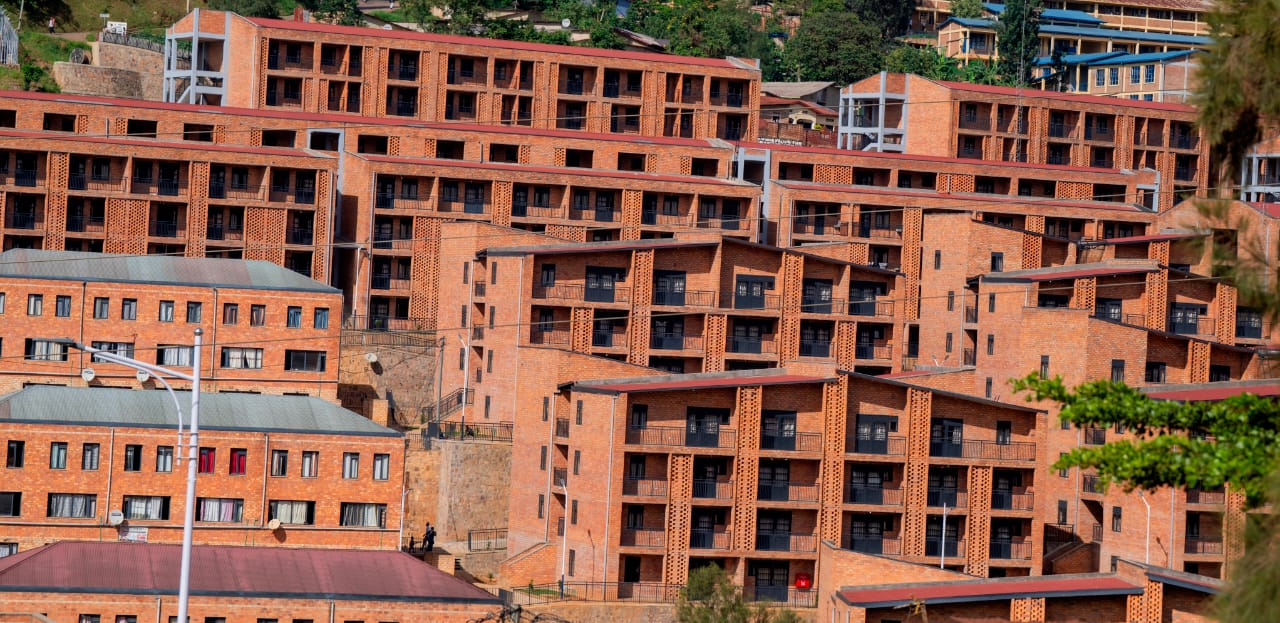
Kigali — The Government of Rwanda has unveiled a new urban housing plan that will see citizens who cannot afford to buy low-cost houses offered affordable rental spaces in large communal halls.
The move is part of the country’s Urban Housing Policy, which seeks to ensure access to decent housing for all income levels as Rwanda’s cities continue to expand.
Under the plan, individuals unable to purchase homes valued between Rwf 25 million and Rwf 40 million will have the option to rent shared accommodation—spacious halls equipped with common kitchens and bathrooms—at a cost not exceeding one-third of their monthly income.
Speaking before the Chamber of Deputies on Tuesday, Minister of Infrastructure Dr. Jimmy Gasore said the policy aims to make housing inclusive and affordable for all categories of urban residents.
“We asked ourselves what the lowest cost for a house could be,” Dr. Gasore said. “For now, we consider between Rwf 25 million and 40 million as the affordable range. But we also recognize that some citizens may not afford even that, so they too must have a dignified place to live.”
The minister explained that such shared halls—each with partitioned spaces and shared amenities—are designed to provide a practical and safe solution for low-income earners in urban areas.
Urban transformation targets
The new housing policy also aligns with Rwanda’s broader urbanization goals. The government projects that over 52 percent of Rwandans will live in urban areas by 2035, and the figure is expected to rise to 70 percent by 2050.
Census data from 2022 shows that Rwanda’s urban population exceeds 3.7 million, with Kigali City alone hosting more than 1.7 million residents. However, nearly 60 percent of Kigali’s population still lives in informal settlements.
City authorities plan to reduce informal housing to 20 percent by 2035, in part through upgrading existing settlements and constructing affordable multi-story apartments in collaboration with development partners.
According to Dr. Gasore, some homeowners in informal neighborhoods will be supported to rebuild modern, multi-unit homes on their plots—occupying part of the building while renting out the rest to other low- or middle-income residents.
“Urban life comes with its realities,” Dr. Gasore noted. “In cities everywhere, people share spaces. What matters is ensuring that such housing is safe, organized, and dignified.”
Mixed housing model
MININFRA says the urban housing model will include a mix of units—standalone houses for high-income earners, studio apartments (chambrettes) for middle-income residents, and shared family units where up to three households use common facilities.
In addition, larger communal halls will be built to accommodate four to six individuals, each paying rent based on their income level.
The ministry maintains that the ultimate goal is to make urban living both inclusive and sustainable, ensuring that no citizen is left without decent shelter amid Rwanda’s rapid urban growth.