
 Simon Kamuzinzi
Farmers in Kayonza District who are supported by the government-funded Kayonza Irrigation and Integrated Watershed Management Project (KIIWP) are now expecting surplus cassava harvests for the market, after abandoning traditional low-yield varieties such as Ndabazi and Maguruyinkware—named for their thin roots resembling quail legs.
For nearly a decade, communities in this drought-prone region have struggled with recurring dry spells.
With irrigation support from KIIWP, however, farmers have transitioned to improved cassava varieties including Buryohe, Nsizebashonje, NAM 130, and Pwani, which promise significantly higher productivity.
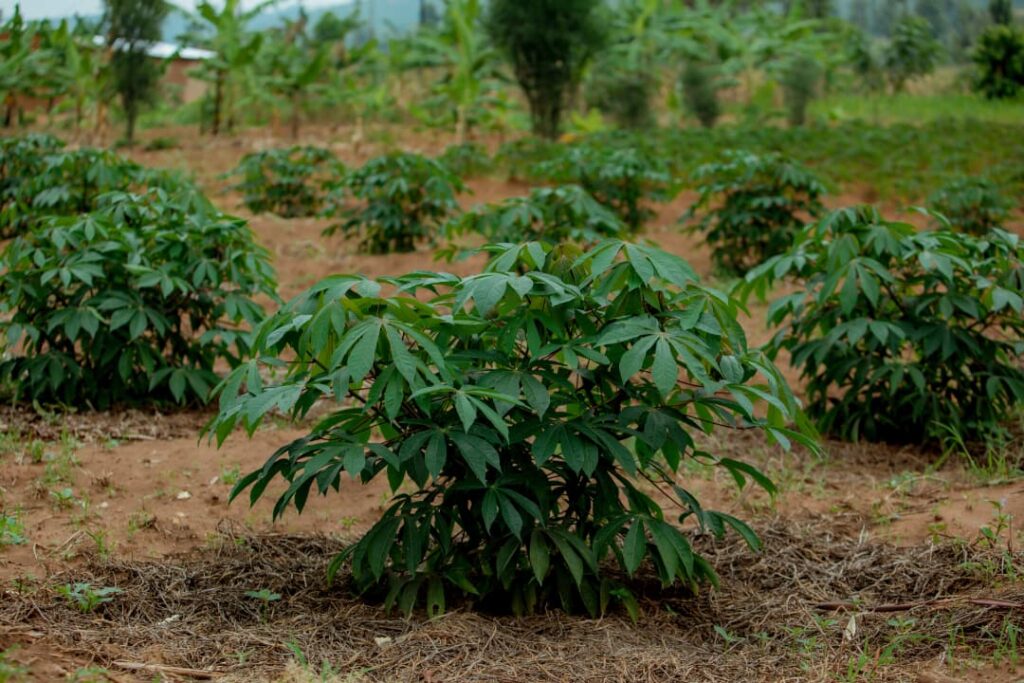
Buryohe Variety
Rwinkwavu Sector is among the areas that previously experienced severe food shortages due to prolonged droughts, sometimes lasting more than a year without meaningful rainfall. Cassava crops would often dry up or succumb to pests and diseases such as cassava mosaic and Kabore.
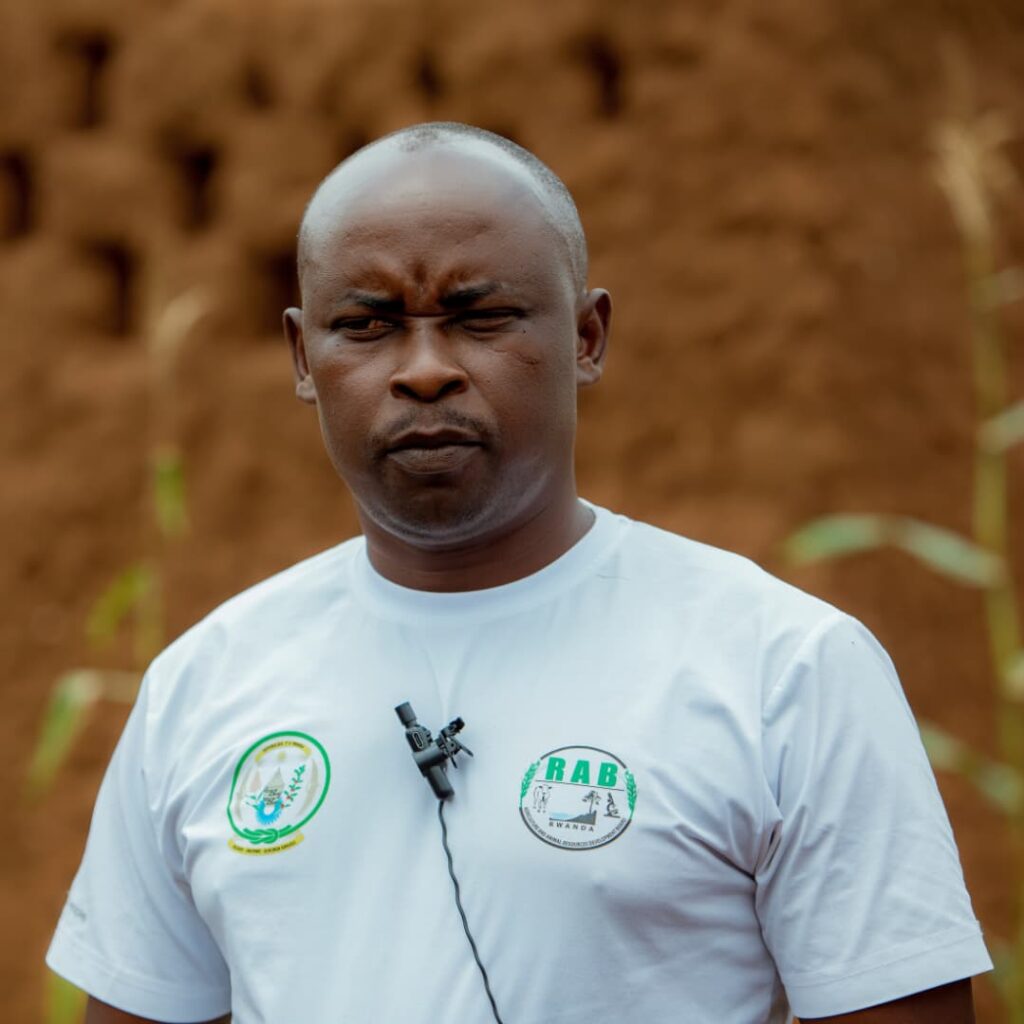
Hafashimana Claude, an agricultural extension officer in Nkondo Cell, Rwinkwavu Sector, explains that although Ndabazi and Maguruyinkware are still widely grown across the country, they no longer deliver meaningful yields.
“These traditional varieties rarely exceeded 2.5 tonnes per hectare,” he says. “But since the second phase of KIIWP trained farmers in improved practices, some fields are now producing between 10 and 15 tonnes per hectare using varieties like Nsizebashonje, Maria, NAM 130, and Buryohe.”
He adds that many farmers have already cut down their Maguruyinkware and Ndabazi crops after they were hit by Kabore disease, describing widespread frustration among growers who continued relying on the old seeds.
A group of 36 farmers led by Hafashimana is now experimenting with professional cassava farming techniques introduced through KIIWP.
They are testing whether the Buryohe variety can indeed yield up to 80 kilograms per plant, as projected by experts from the Rwanda Agriculture and Animal Resources Development Board (RAB), the agency implementing the project.
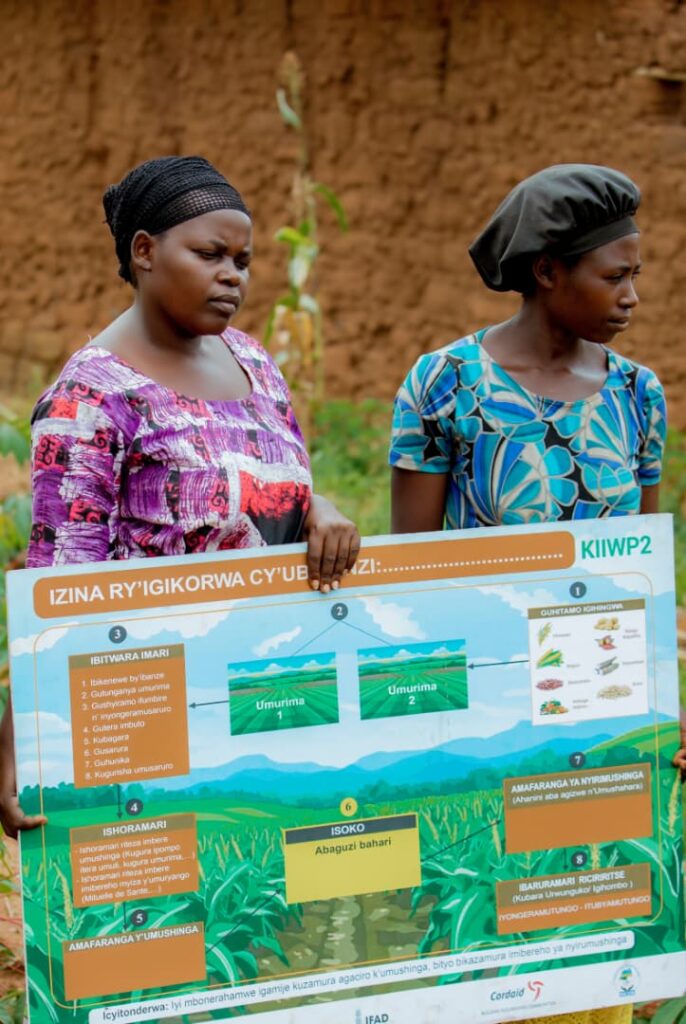
Early signs are promising. One of the trained farmers, Priscilla Mukangelina, notes that their Buryohe demonstration plot appears healthier and more vigorous than other trial fields, giving them confidence that the expected 80 kilograms per plant could be achievable.
She explains that the results come from improved planting methods: cassava cuttings are planted in pits 60 centimeters deep and spaced two meters apart. Farmers line the pits with dry grass, add manure, and cover with a thin layer of soil before planting.
“The advantage is that the crop can be irrigated if rains completely fail,” Mukangelina says. “And you get high yields from a relatively small piece of land.”
Having already seen her output increase more than fourfold compared to traditional farming with Ndabazi and Maguruyinkware, Mukangelina has decided to fully embrace commercial cassava production.
Farmers now see themselves not only as subsistence growers but as commercial producers capable of supplying both domestic and international markets.
Rudacogora Jean de Dieu, who oversees investment and financial inclusion under KIIWP, says beneficiaries have also been trained in agribusiness. The project is linking them with sector-level SACCOs to facilitate access to capital, enabling them to scale up production and invest in value addition.