
 Simon Kamuzinzi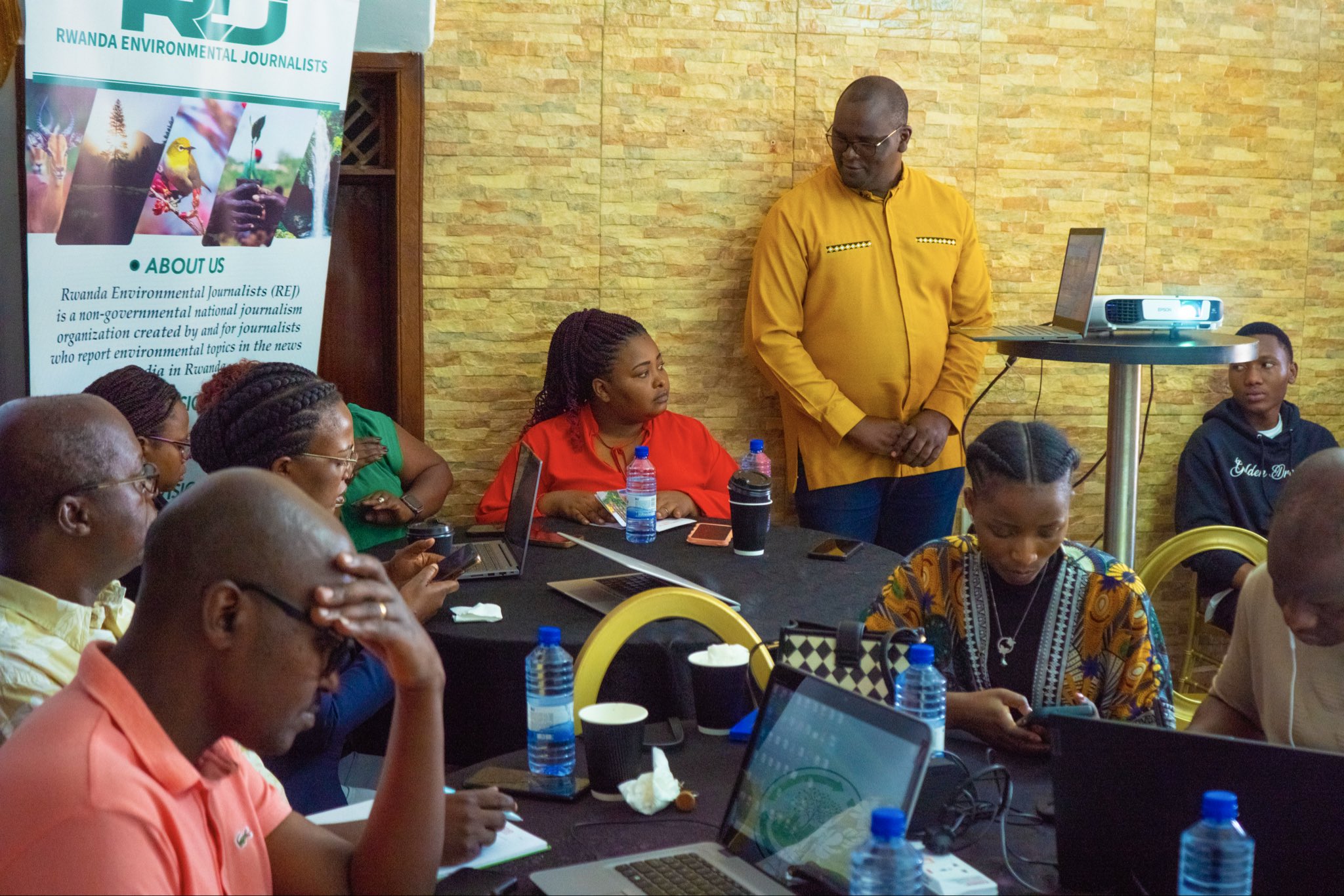
Environmental journalists in Rwanda have been urged to strengthen fact-checking and use geolocation tools in their reporting to ensure accuracy and combat misinformation.
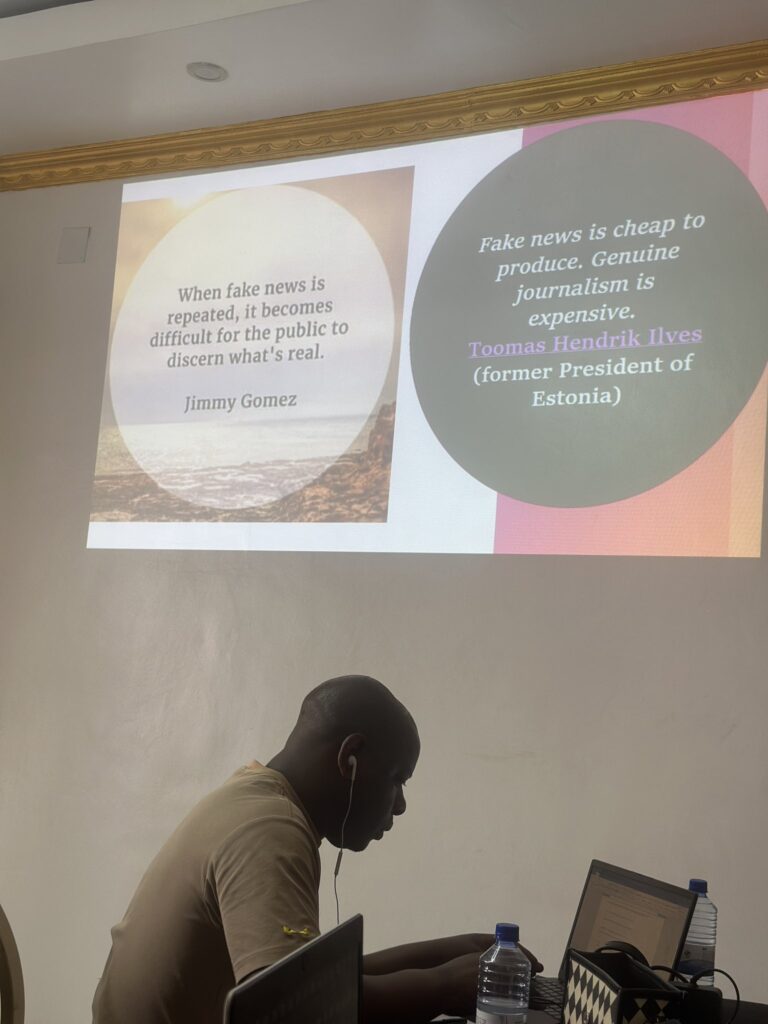
This call was made during the opening of a three-day training session under the Environmental Reporting Skills for Impact Project, organized by the Rwanda Environmental Journalists (REJ) with support from the Fojo Media Institute.
The workshop aims to enhance journalists’ capacity to produce credible, evidence-based stories on environmental issues while fighting the growing threat of misinformation.
Facilitated by Eugene Hagabimana, a lecturer at the University of Rwanda’s School of Journalism, and Assoumani Ntakirutimana, a media expert from Fojo, Rwanda Media Programme (RMP), the training focuses on how journalists can use technology and ethical standards to improve their storytelling.
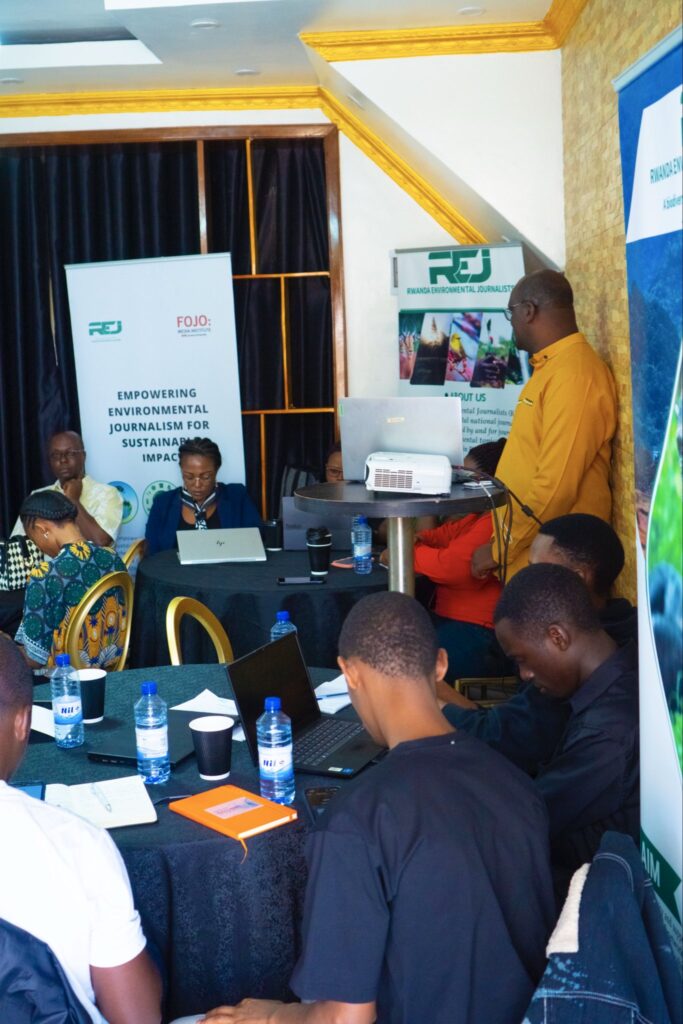
Hagabimana explained the different forms of misleading information that can affect environmental reporting, noting that:
Misinformation is false but not intended to harm while Disinformation is false and meant to deceive.
Malinformation is true but used to harm, while Misleading information is partly true but distorted to mislead.
“Knowing the difference helps journalists become smarter and more responsible for media consumers,” Hagabimana said.
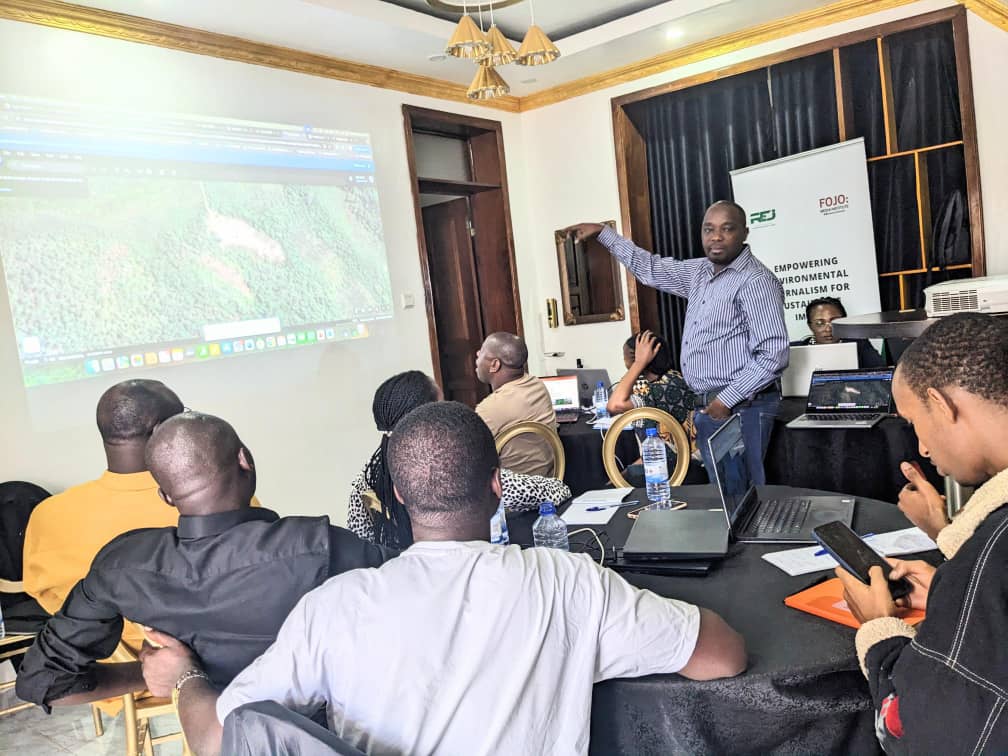
Meanwhile, Ntakirutimana introduced participants to tools such as Google Maps and Google Earth, emphasizing their importance in verifying locations and monitoring environmental changes.
These tools, he said, help journalists identify changes in land use, terrain, and distances — crucial for producing accurate environmental stories.
The training marks another milestone in building a well-informed network of environmental journalists who use data and technology to promote accountability and protect the environment.