
 Simon Kamuzinzi
Rwandans and other individuals seeking jobs that require German language skills have been offered certification examinations in Rwanda.
The German Language Academy, Der Sprachen Hub, is currently providing Rwandans and other interested candidates with internationally recognized certificates known as the European Consortium for the Certificate of Attainment in Modern Languages (ECL).
These certificates enable successful candidates to access job opportunities in German-speaking countries worldwide after passing the required language examinations.
The institution, headquartered in Muhima, Kigali City (along the road branching off opposite BTN Television towards Hotel Okapi), also has branches in Huye and Musanze.
Der Sprachen Hub administers German language proficiency exams in listening, reading, speaking, and writing, offered across four levels: A2, B1, B2, and C1.
Anyone wishing to sit for a German language exam but without prior knowledge of the language must first undergo training at Der Sprachen Hub for a period not exceeding six months, depending on individual commitment.
The tuition fee is approximately RWF 500,000, exclusive of examination fees.
German is spoken by an estimated 130–135 million people worldwide, mainly in Europe. This number is relatively small compared to French, which is spoken by about 320–350 million people, predominantly in Africa.
However, according to Artificial Intelligence technology (ChatGPT), individuals seeking employment and business collaboration are increasingly encouraged to learn German rather than French.
AI analysis notes that Germany is the leading economy in Europe and ranks fourth globally in exports. It is home to major multinational companies such as BMW, Siemens, Bosch, SAP, and Volkswagen, offering vast opportunities for investment, employment, and international partnerships.
“If you are interested in industrial investment, technology-driven projects, and high-value production-based businesses, German is the better option. Germans value their language highly in business, even though many speak English. Mastering German opens many doors and builds trust and stronger partnerships,” ChatGPT states.
German is widely used in industry and technology sectors, including engineering, manufacturing, renewable energy, and advanced automotive and Industry 4.0 technologies.
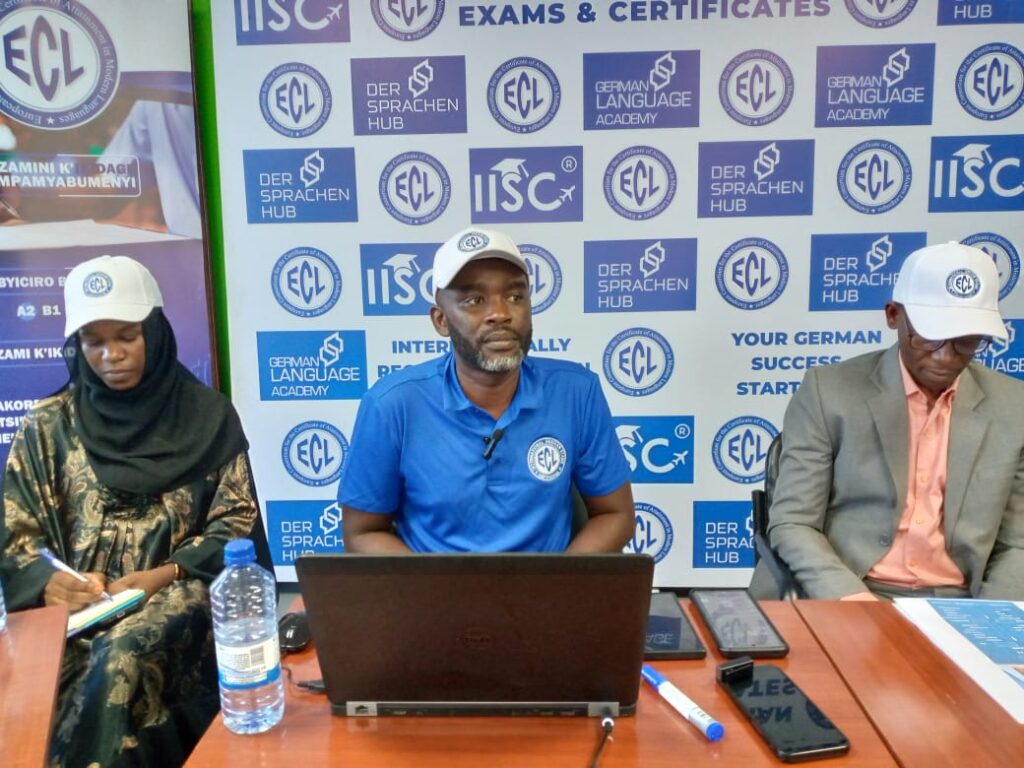
Managing Director of Der Sprachen Hub, Maurice Mwizerwa, explained that professionals with the greatest opportunities to benefit from learning German include doctors and nurses, graduates in social sciences and education, engineering and mechanical studies, hospitality (hotels and restaurants), and logistics, including air, sea, and land transport.
He added that there is also high demand for German-speaking professionals in agriculture-related fields, such as seed production, floriculture, forestry management, dairy science, and juice processing.
“These professionals are highly needed both in German-speaking countries and in Rwanda, yet they are scarce,” Mwizerwa said.
He further noted that in Rwanda, demand for German speakers is particularly high in industries such as Volkswagen Rwanda, BioNTech (a vaccine manufacturing company), the German Embassy in Rwanda, and in cooperation projects between Rwanda and the German state of Rhineland-Palatinate.
German is widely used in countries including Germany, Austria, Switzerland, Liechtenstein, Luxembourg, and Belgium, where individuals with German language skills can access employment and study opportunities. In some cases, students are paid while studying, according to Der Sprachen Hub.
Dr. Phocas Niyomushumba, who studied German in Austria, said the language will open doors for many people seeking to study at universities around the world, as well as access employment, investment opportunities, and enhanced international relations.
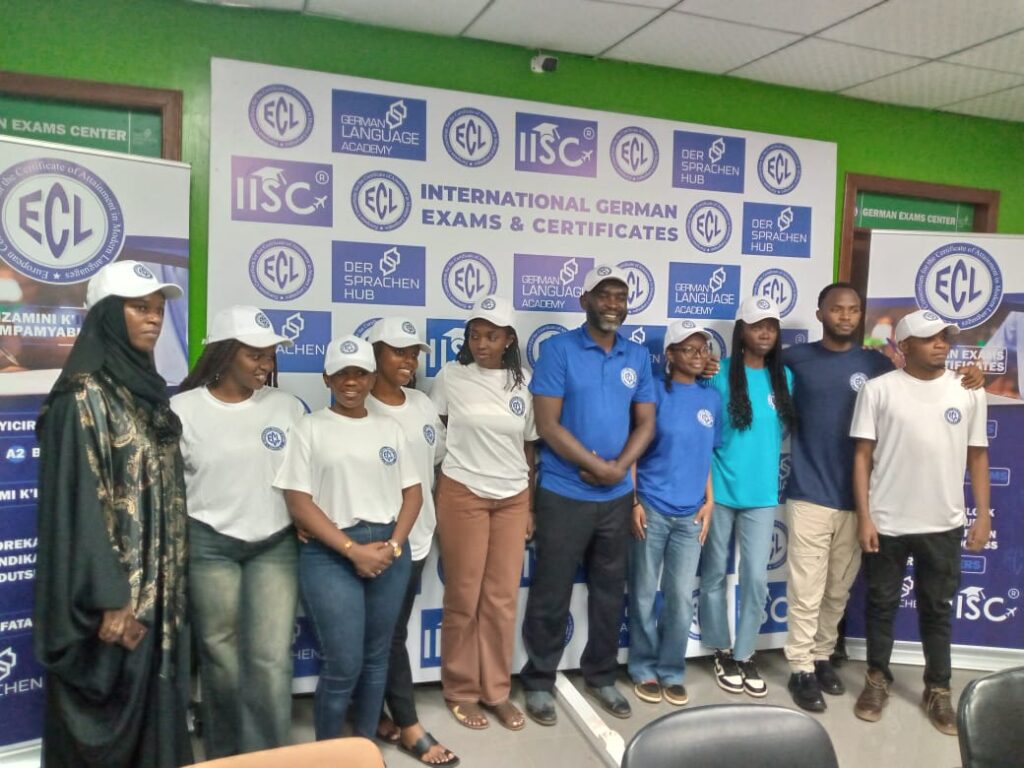
Eric Gatete, a graduate of German language studies at Der Sprachen Hub (ECL), told MaMedecine online newspaper that passing exams elsewhere had been difficult because failing one subject meant losing the entire certificate.
“With ECL, it is different,” he explained. “A subject you pass compensates for one you fail, allowing you to still obtain the certificate.”
Der Sprachen Hub explains that if a candidate scores 80% in one subject and 40% in another, the two scores—out of a combined 200—are averaged, resulting in 60%, which qualifies the candidate for certification.
So far, over 1,000 students have completed courses at Der Sprachen Hub, and 200 graduates have successfully relocated to Germany with the institution’s support.
Registration for German language exams at Der Sprachen Hub (for those already proficient in the language) will close next January, with the next examination scheduled for 6 February 2026. Exams are held every two months thereafter. For those wishing to learn German, enrollment remains open at all times.