
 Simon Kamuzinzi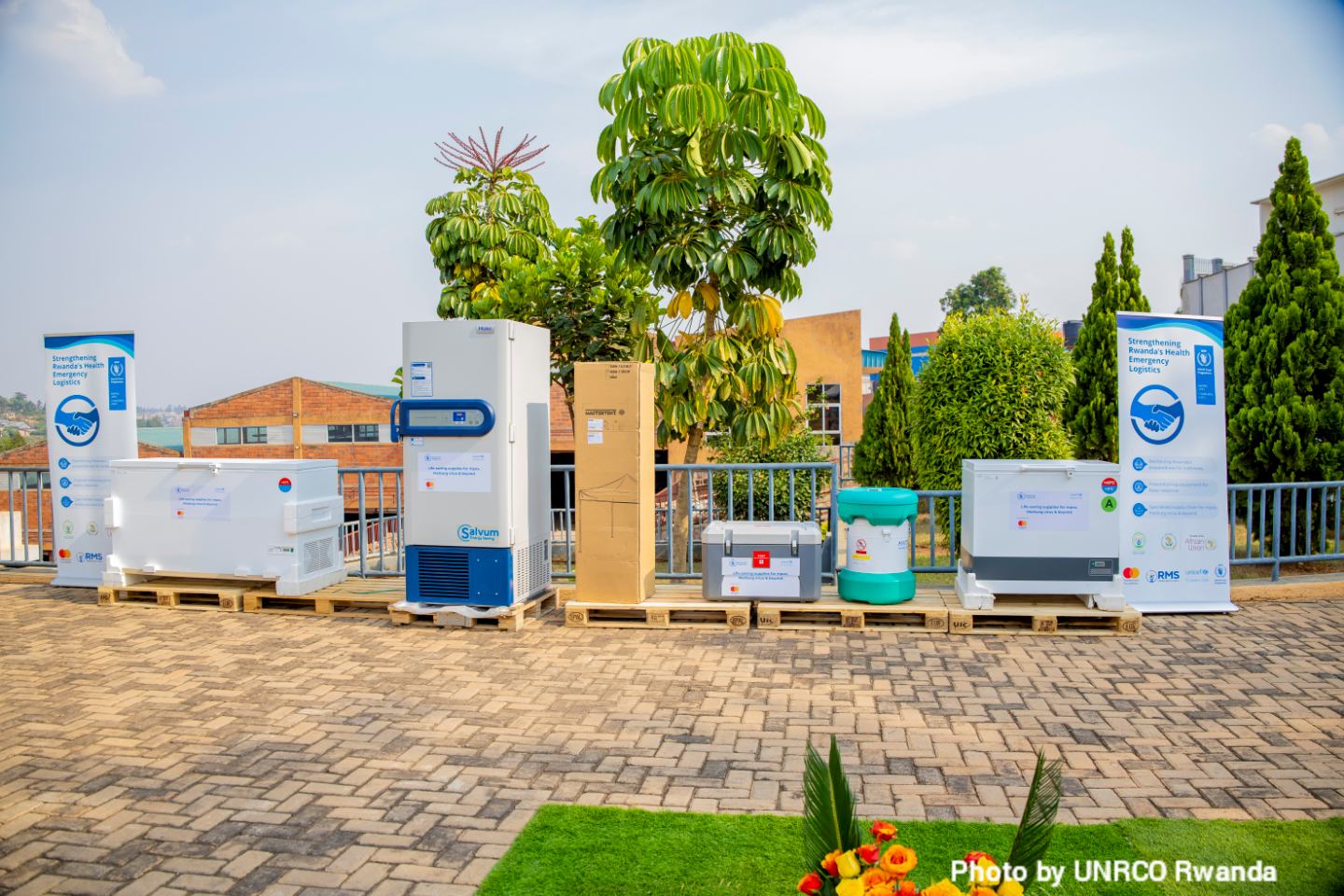
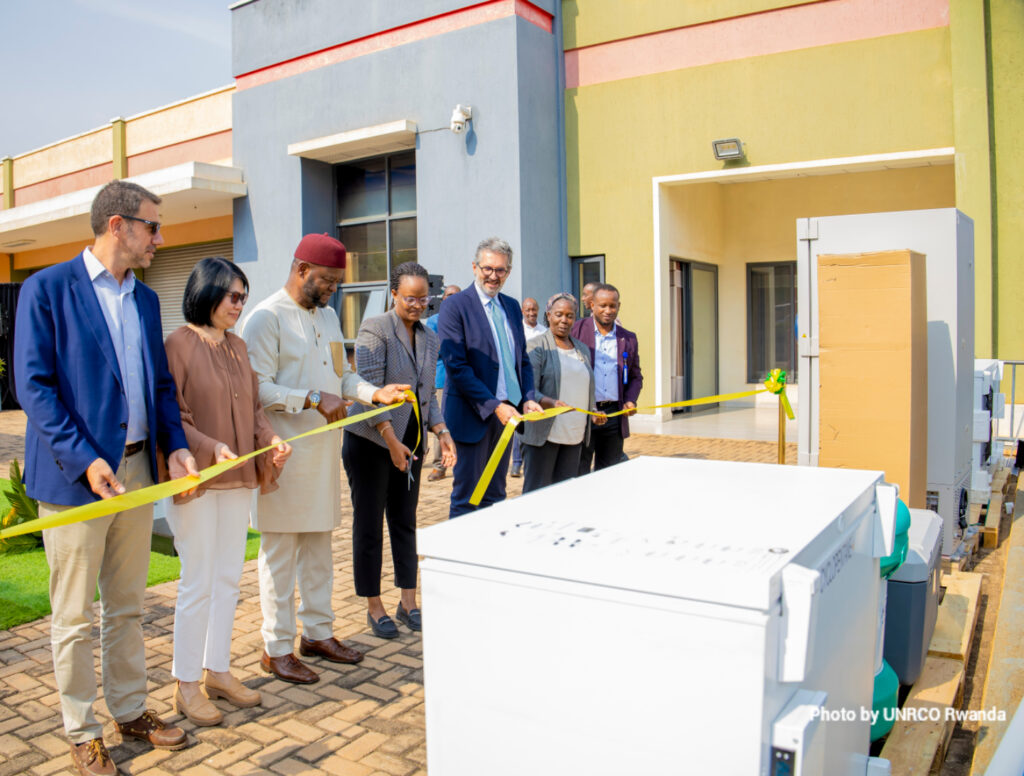
KIGALI – Rwanda’s capacity to respond swiftly to public health emergencies has received a major boost following the handover of more than 630 units of cold chain equipment to the Ministry of Health by the United Nations (UN) in partnership with the Mastercard Foundation.
The handover ceremony took place yesterday at the Rwanda Biomedical Center (RBC) vaccination warehouse in Kigali’s Special Economic Zone, Masoro.
The new equipment—funded through the Mastercard Foundation—includes ultra-low temperature freezers, medical-grade refrigerators, passive cold boxes, thousands of icepacks, and multipurpose tents.
These assets will strengthen vaccine storage, preserve biological samples, and support emergency outreach operations, especially in remote or high-risk areas.
Partnership in action
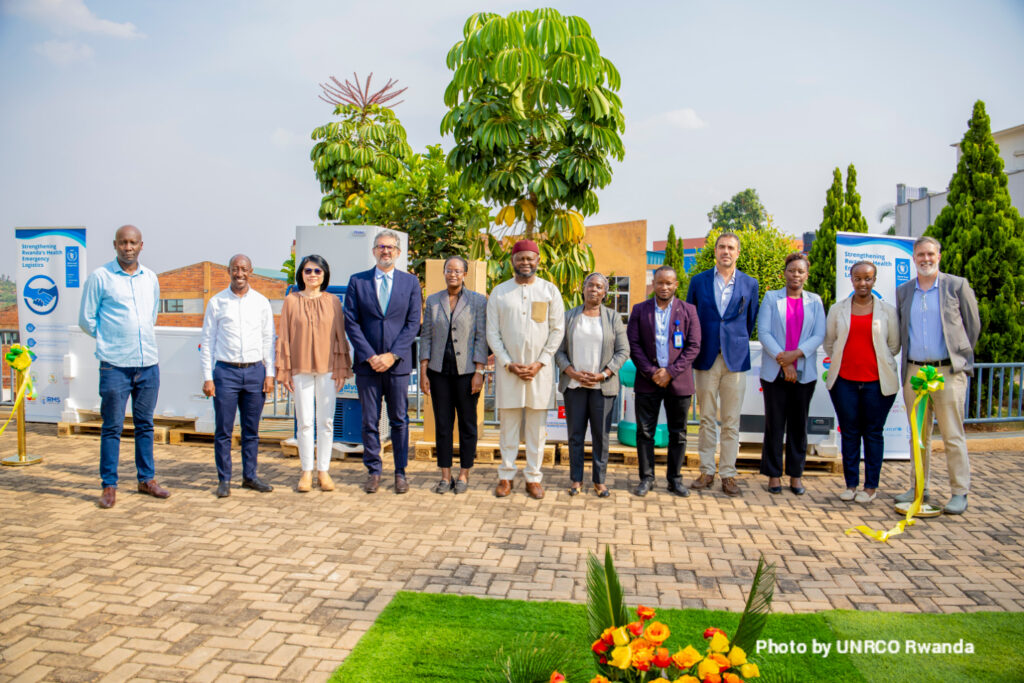
Representatives from Rwanda Medical Supply (RMS), the Rwanda Biomedical Center, UNICEF, WHO, and WFP attended the event. UN Resident Coordinator Mr. Ozonnia Ojielo delivered closing remarks on behalf of UN agencies.
“This initiative not only strengthens our medical supply chain but also builds on our proven leadership and coordination capabilities, as seen during the Marburg virus disease outbreak,” said Ms. Diana Mutoni, Deputy CEO of RMS.
WFP Rwanda Country Director, Andrea Bagnoli, emphasized the operational benefits saying “This equipment will help Rwanda respond faster, store safer, and reach further in times of public health emergencies.”
Ms. Bee Hong Ong, UNICEF’s Representative – Officer in Charge, confirmed UNICEF’s commitment to assist with the nationwide deployment of the equipment.
Building on past success
The initiative builds on Rwanda’s successful handling of the Marburg Virus Disease outbreak in late 2024, which demonstrated the country’s strong leadership and coordination in health crisis management.
Globally, the Mastercard Foundation allocated USD 50 million to strengthen rapid responses to infectious disease outbreaks—USD 15 million to WFP and USD 35 million to UNICEF.
In Rwanda, UNICEF’s support included risk communication, infection prevention and control, mental health and psychosocial support, and continuity of essential health and nutrition services. More than 55,000 community health workers were trained, reaching 4.5 million people across 15 priority districts.
“The Mastercard Foundation is proud to partner with WFP and UNICEF in safeguarding the health, safety, and livelihoods of vulnerable communities,” said Dr. John Nkengasong, Executive Director at the Mastercard Foundation.
“This partnership is a model of effective collaboration between international agencies and the Government of Rwanda. We look forward to building on this success through the new UN Sustainable Development Cooperation Framework,” Ojielo concluded.