
 Kigaliinfo.com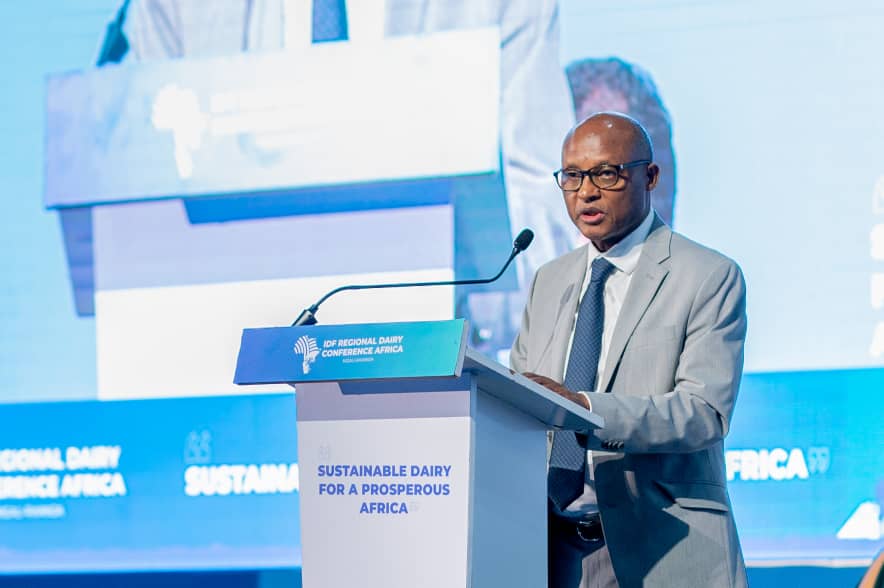
In an ambitious push to meet rising demand for dairy products and enhance food security, Rwanda is set to reform its dairy farming system by adopting successful breeding and management practices from Brazil.
This strategic move could see the country’s daily milk output triple over the next four years—from the current 3 million liters/day to an impressive 10 million liters/day by 2029.
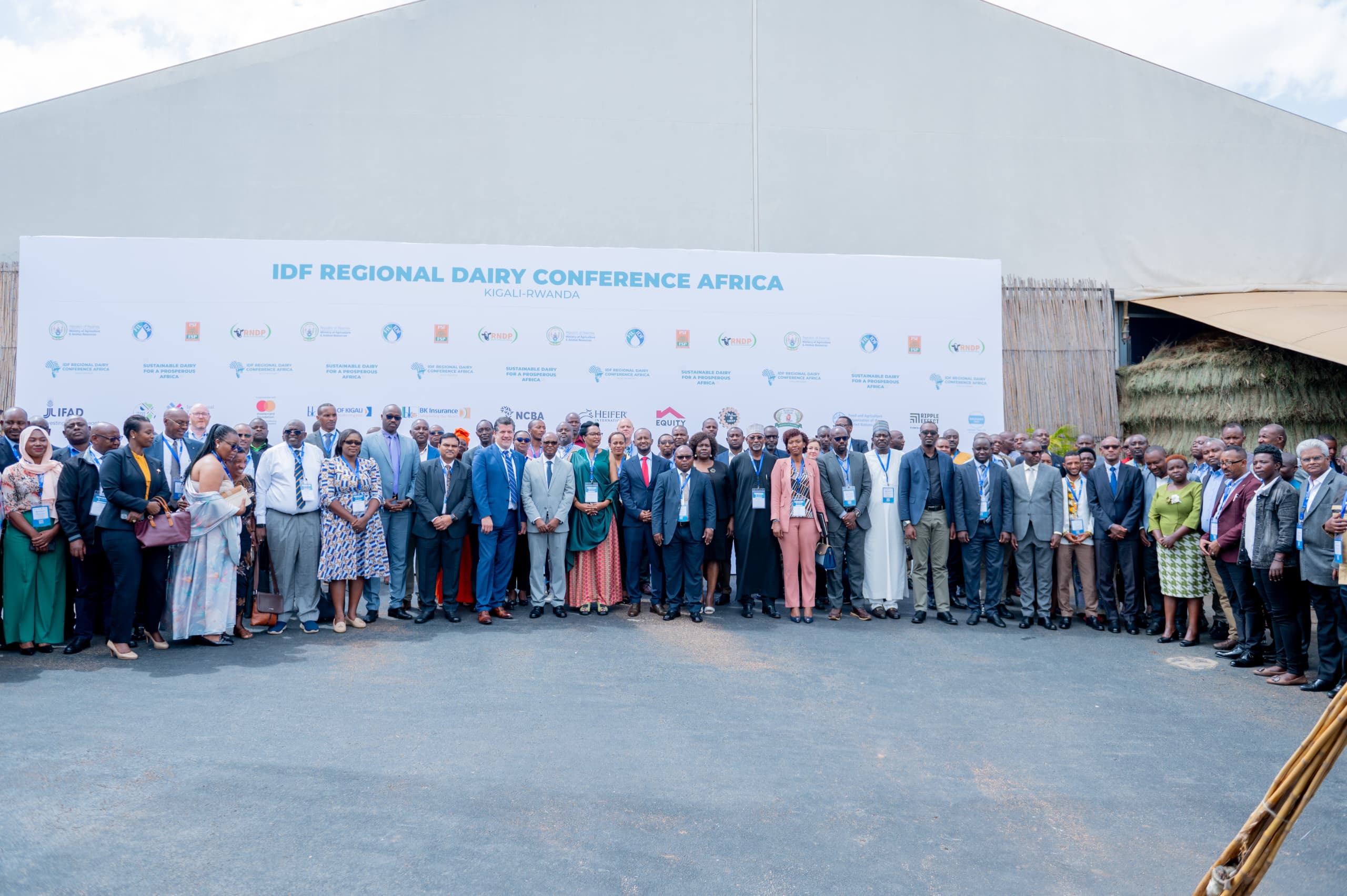
Speaking during the International Dairy Federation (IDF) Regional Dairy Conference Africa, held in Kigali, the Minister of Agriculture and Animal Resources, Dr. Mark Cyubahiro Bagabe, outlined the government’s plan to revolutionize Rwanda’s dairy sector by improving the productivity of its dairy cows.
The event attracted stakeholders from across Africa and beyond, all focused on a common challenge: boosting milk yields to meet growing domestic and regional demand.
Tackling Low Productivity with Global Lessons
Despite years of investment in the livestock sector, Rwanda’s milk yields remain low by global standards.
On average, a cow in Rwanda produces just 10 liters per day—far below the output in more advanced dairy economies.
Some imported high-yielding breeds, such as Holsteins (Friesians), are capable of producing up to 40 liters a day in their native cold climates, but underperform once introduced to Rwanda’s tropical environment.
“Even when these cows are brought here, they often produce no more than 20 liters,” said Dr. Bagabe. “That might be due to stress from travel, poor housing, inadequate feeding, or difficulty adapting to Rwanda’s warmer climate.”
To address this, the Ministry of Agriculture (MINAGRI) plans to turn to countries like Brazil, India, and Kenya—regions with climates similar to Rwanda’s—where heat-adapted dairy breeds resembling Rwanda’s traditional Inyambo cattle are already producing high milk yields.
From Conference to Cow Shed: Knowledge Transfer in Action
The conference, which concludes on World Milk Day (June 1, 2025), is not just a ceremonial gathering—it’s a knowledge-sharing platform. Over 350 Rwandan dairy farmers participated, with hopes that they will take home actionable insights on animal husbandry, feed management, and climate-resilient breeding.
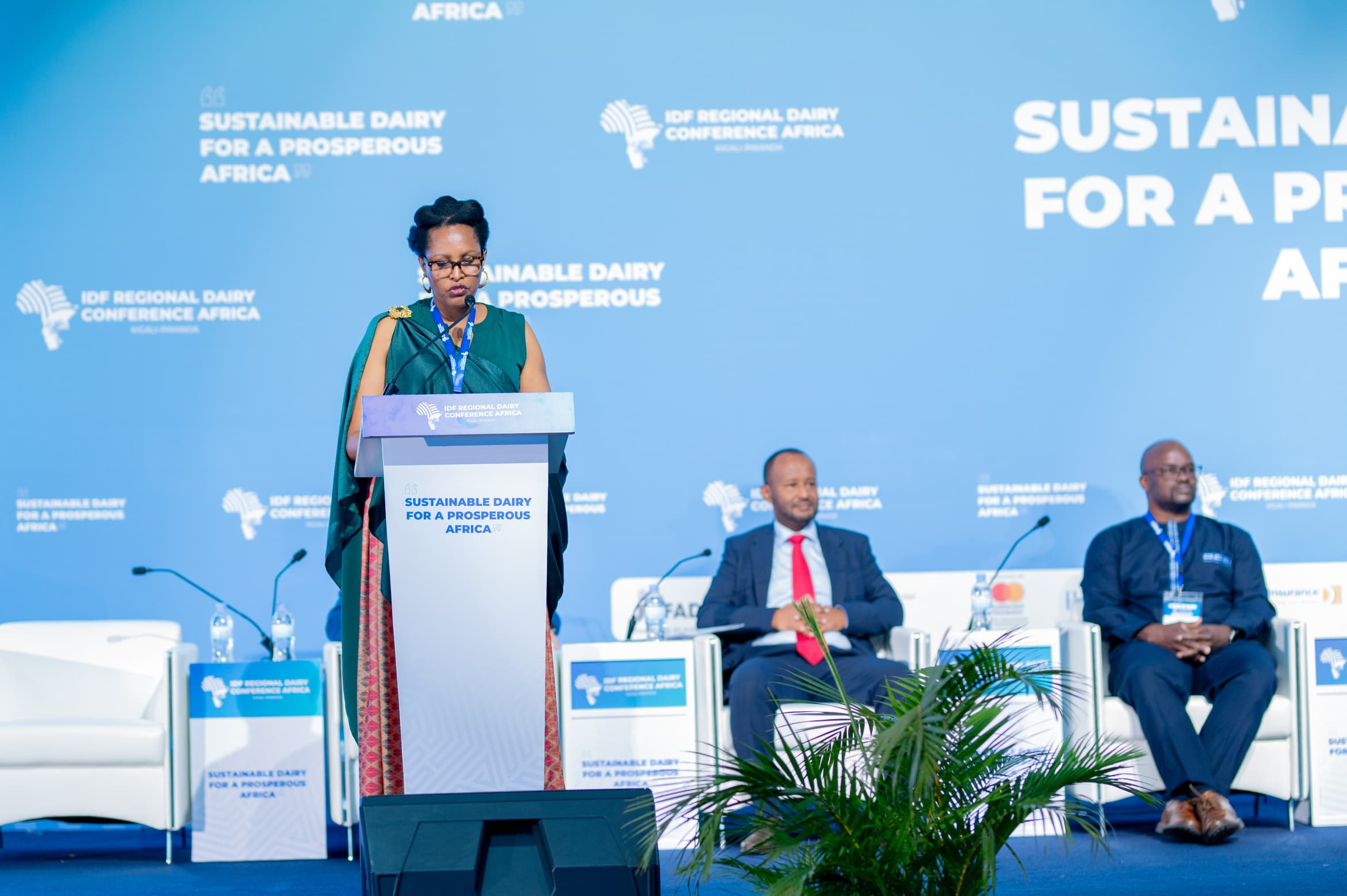
Florence Musime Umurungi, President of the Rwanda National Dairy Platform (RNDP), emphasized the importance of this knowledge transfer. “Each farmer attending this conference will leave empowered with new capacity to increase milk output. This will have a direct impact on both livelihoods and national nutrition,” she said.
International Dairy Federation President Gilles Froment also highlighted Rwanda’s opportunity to benefit from international networks.
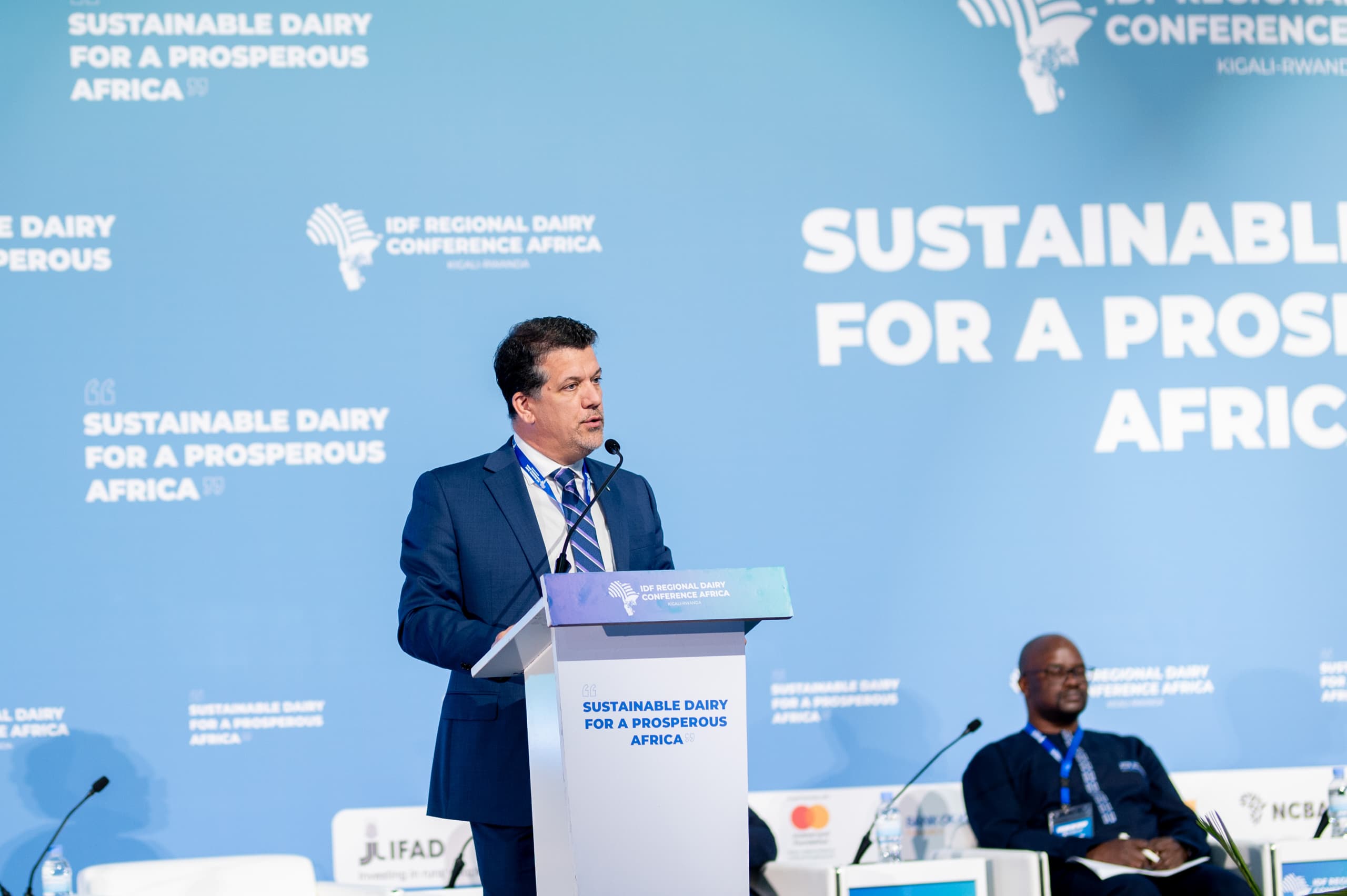
“We’re committed to connecting Rwandan farmers with expertise,” he said, citing Holstein cows in Europe and America that produce up to 48 liters per day.
However, he acknowledged these breeds are poorly suited to Rwanda’s climate, reinforcing the case for sourcing regionally adapted genetics.
The Feed Factor: Empowering Youth and Using Tech
Another challenge tackled at the conference is the scarcity of quality animal feed. In many rural communities, elderly people are often tasked with feeding livestock—yet lack the physical strength or resources to do so efficiently.
MINAGRI is now looking to technology and youth to fill this gap. One promising solution is hydroponic fodder production, a soil-free technique using vertically stacked trays to grow nutrient-rich grass. This system can be set up in small spaces and urban environments, making it ideal for Rwanda’s high-density regions.
The ministry also aims to mobilize young people to take up modern dairy farming by offering training and access to equipment.
Financing the Future: IFAD Steps In
Scaling up dairy production requires capital—and Rwanda’s financial institutions are getting support to help farmers access it. The International Fund for Agricultural Development (IFAD) has injected $120 million (approximately RWF 160 billion) into local banks, earmarked for livestock loans and feed production investments.
This funding could be a game changer, especially for small- and medium-scale farmers looking to transition from subsistence to commercial dairy farming.
Looking Ahead
Rwanda’s dairy transformation is more than a matter of agricultural economics. It’s a public health and nutrition imperative.
With per capita milk consumption currently at only 82 liters per year—well below World Health Organization recommendations—the government hopes increased production will lead to greater availability and affordability of milk for all Rwandans.

If successful, the strategy to emulate Brazil’s model—adapted to Rwanda’s local conditions—could position the country as a regional leader in sustainable dairy development.
The roadmap is clear: Our milk, our health, our future—and better outcomes for farmers and consumers alike.

 Simon Kamuzinzi