
 Simon Kamuzinzi
Twenty-five years after Rwanda embraced decentralisation process, more than 41 percent of government services are now delivered closer to citizens through local authorities and digital platforms.
Yet, as institutions reflect on the progress made since 2001, questions remain about which services still force citizens to travel to Kigali and what must be done to fully realise the promise of people-centred service delivery.
Readers are invited to share their views in the comments section of this story or via email at kigaliinfonews@gmail.com, indicating public services that were previously unavailable near their homes and required travel to Kigali or provincial offices. They can also point out remaining challenges and suggest possible solutions.
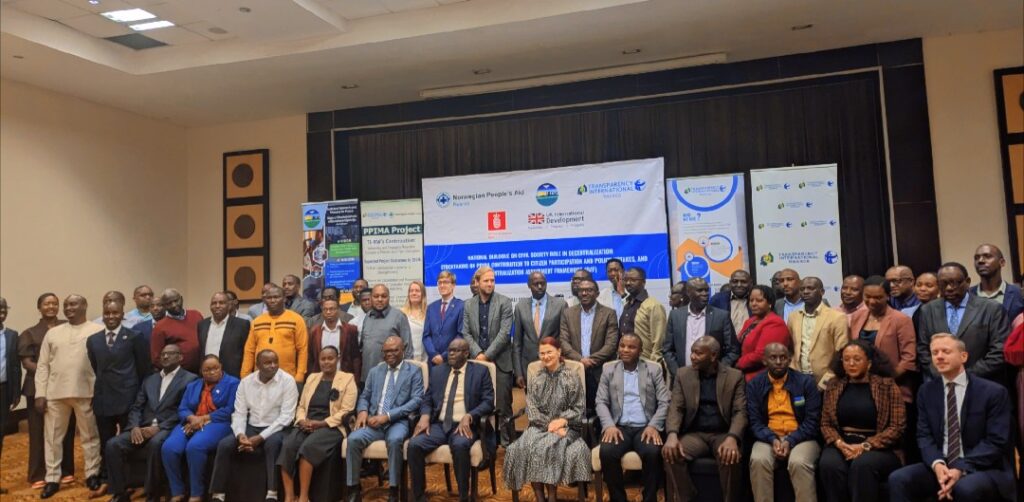
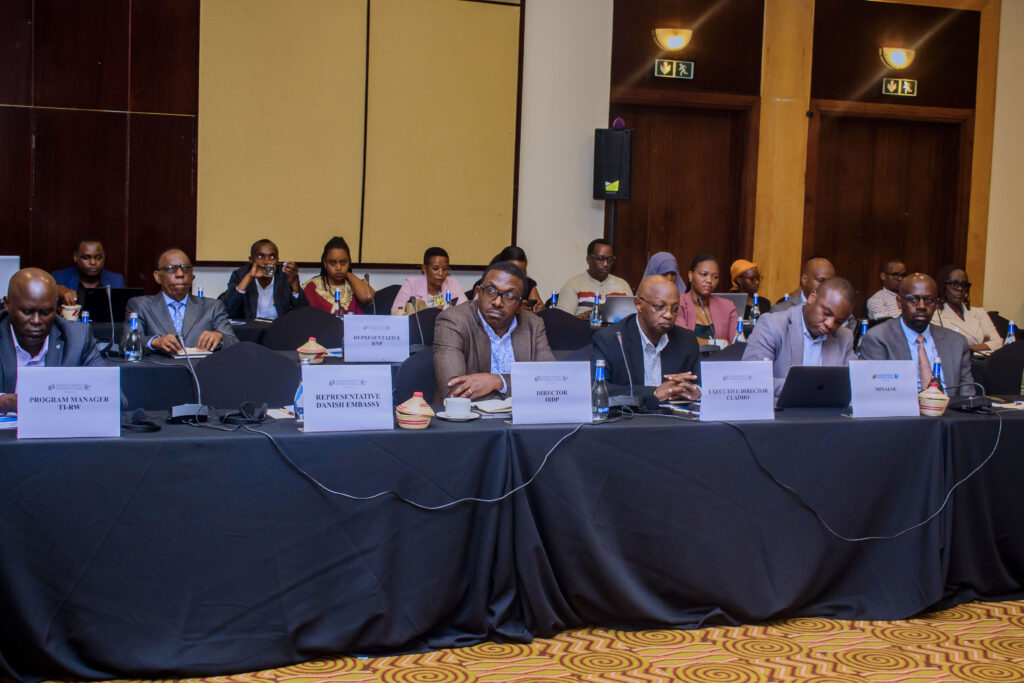
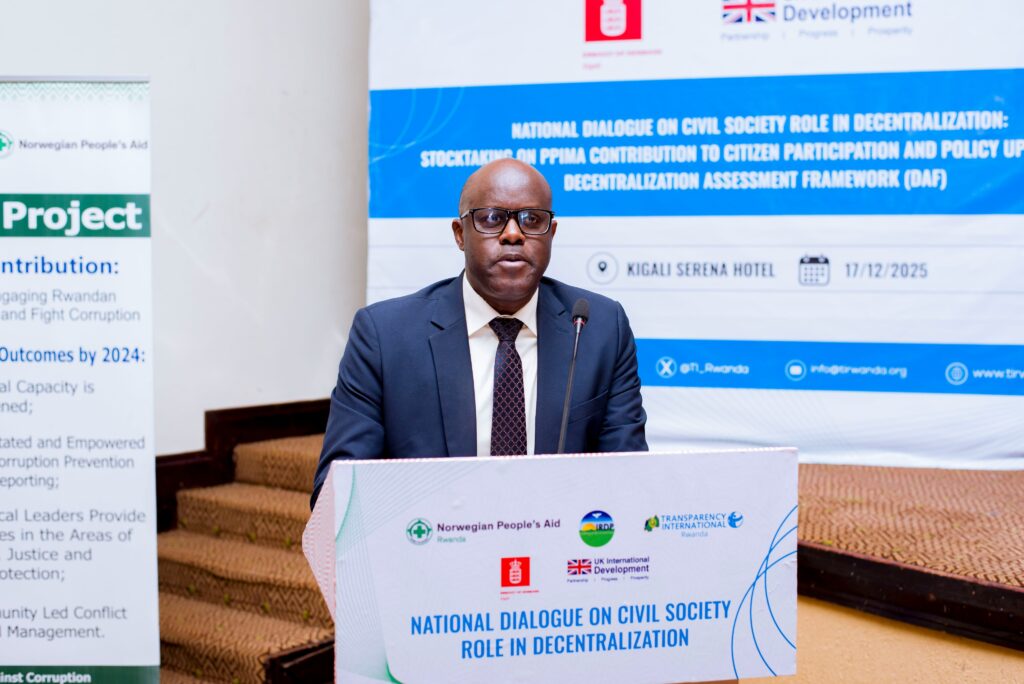
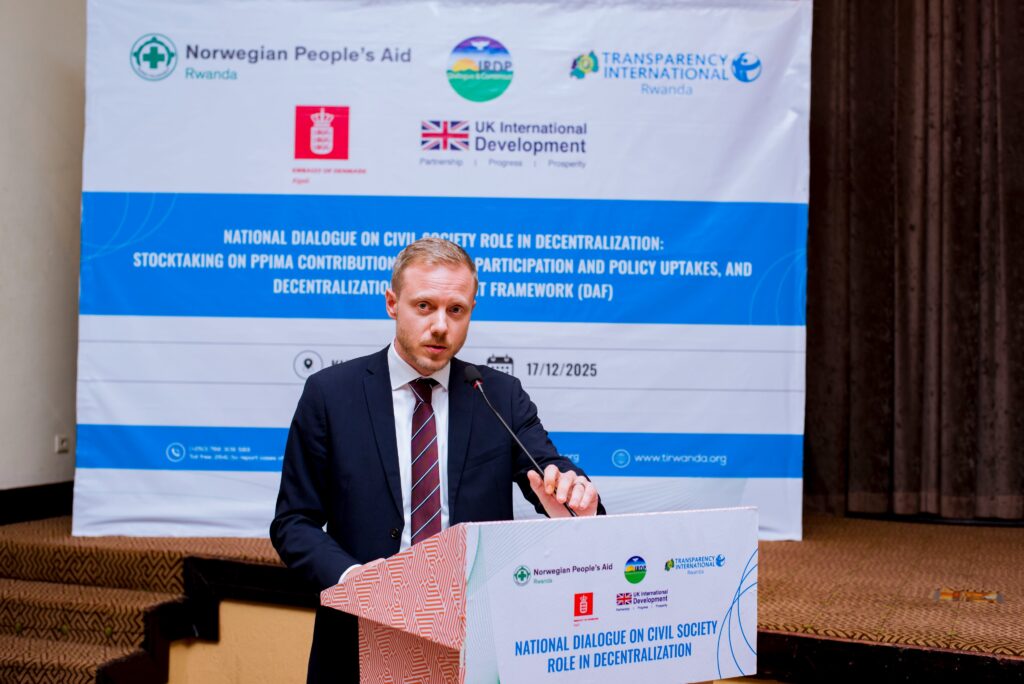
On 17 December 2025, Transparency International–Rwanda (TI), an international organisation fighting corruption and injustice, together with MINALOC, convened civil society organisations to review their contribution to decentralisation and to discuss the capacity of local government structures to deliver public services closer to citizens.
Richard Kubana, Director General in charge of Civic Education and Volunteer Coordination at MINALOC, said that more than 41 percent of public services are now provided at the Cell and Sector level and through the Irembo online platform.
However, the goal is to ensure that all citizens can access services through the Byikorere initiative, which enables people to obtain services remotely using a computer or mobile phone.
“The Byikorere programme (accessing services through the Irembo platform) has proven to help reduce costs by nearly 71 percent, including transport and time,” Kubana said. “We are asking ourselves how close to 90 percent of the services a citizen needs can be accessed on their phone — and that is exactly what we are working towards.”
Kubana, together with the Mayor of Gatsibo District who is Dean of all District Mayors in Rwanda, Richard Gasana, noted that some services still require citizens to travel far from where they live, particularly those related to land.
In such cases, individuals may feel dissatisfied with initial decisions and choose to appeal to higher levels they believe may rule more fairly, sometimes ending up at district level or beyond.
Kubana added that a national-level task force bringing together district land officers has been in place for more than two weeks, working on a framework to help resolve land-related issues, including disputes and construction matters.
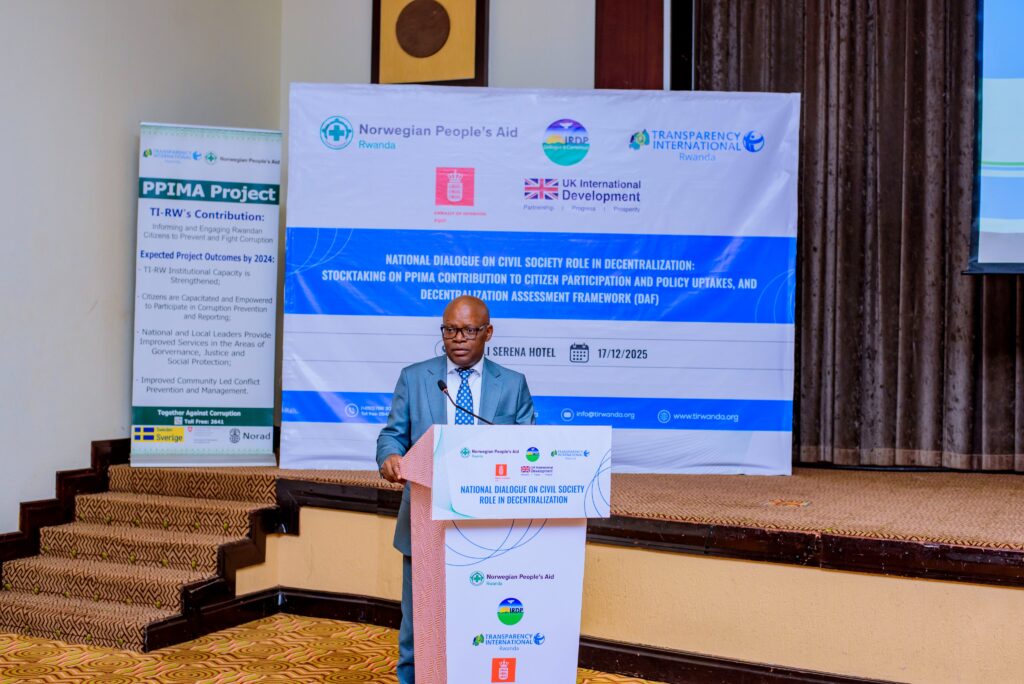
Apollinaire Mupiganyi, ED TI-Rwanda
Two weeks ago, Transparency International released its annual corruption report, the Rwanda Bribery Index 2025, which ranked local government institutions second in terms of corruption prevalence, particularly in cases related to land.
Transparency International, the Institute of Research for Dialogue and Peace (IRDP), and the Health Development Initiative (HDI), with support from international development partners including UK International Development, Norwegian People’s Aid, and the Embassy of Denmark in Rwanda, recently concluded a 15-year joint project aimed at strengthening citizens’ voice and participation in public affairs.
Transparency International said the project, known as Public Policy Information Monitoring and Advocacy (PPIMA), enabled citizens to report dissatisfaction with public services, participate in budget discussions, and work alongside authorities in planning and prioritising their needs.
The organisation is now calling on central government institutions to grant greater autonomy to districts, so that citizens’ priorities expressed through local leaders are effectively implemented — particularly in key sectors such as health, education, agriculture, and infrastructure.