
 Simon Kamuzinzi
Rwanda and the United Kingdom are renewing a push to secure investment for modern food cooling systems, as part of efforts to reduce post-harvest losses and protect the environment.
Officials from both sides say they are actively engaging partners to finance cold-chain solutions that rely on climate-friendly refrigeration technologies.
The discussions have been taking place in Kigali at the Africa Centre of Excellence for Sustainable Cooling and Cold-Chain (ACES), in a meeting that follows sharp criticism from Paul Kagame, President of the Republic, over slow progress of the existing cooling program.
Earlier this week, Paul Kagame questioned why agricultural produce continues to spoil due to lack of refrigeration, despite government efforts to address the issue.
During a retreat of Central Government and Local Leaders who were gathering in Gako’s Military Basement-Bugesera on Monday, President Kagame pressed the Prime Minister, Dr Justin Nsengiyumva for answers, who therefore explained that significant investments had already been made in cooling equipment—many of which remain unused.
The Prime Minister acknowledged that the problem has persisted for years, noting that several machines purchased by the government have been idle for over a year.
The responsibility, he said, partly lies with the National Agricultural Export Development Board(NAEB). President Kagame, however, insisted on swift accountability, calling for immediate action and clear identification of those responsible.
A shift toward urgent and practical solutions
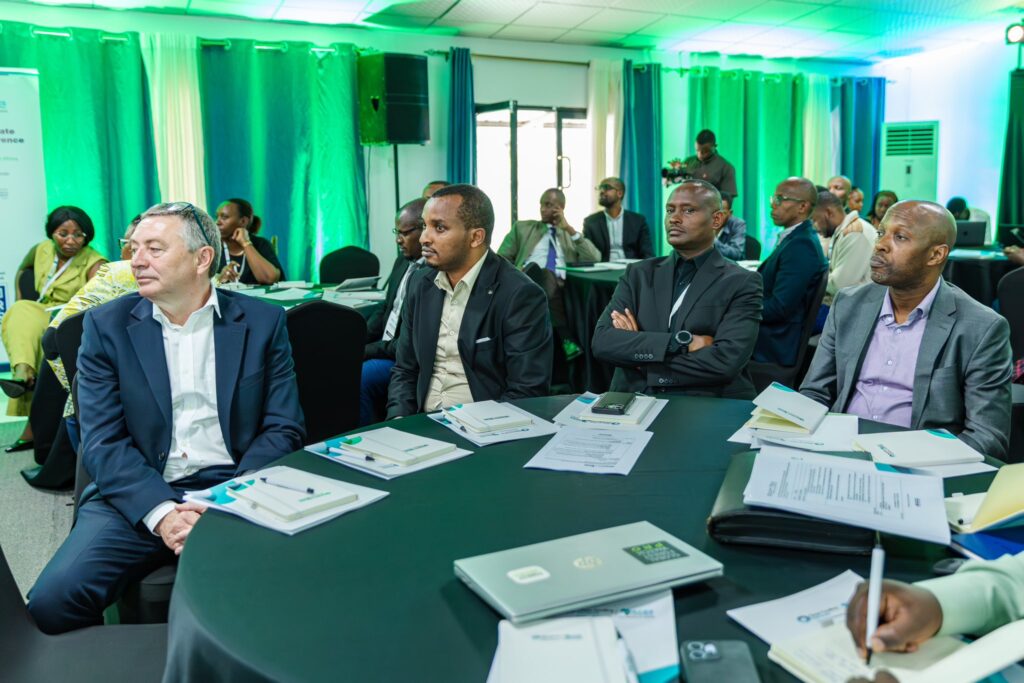
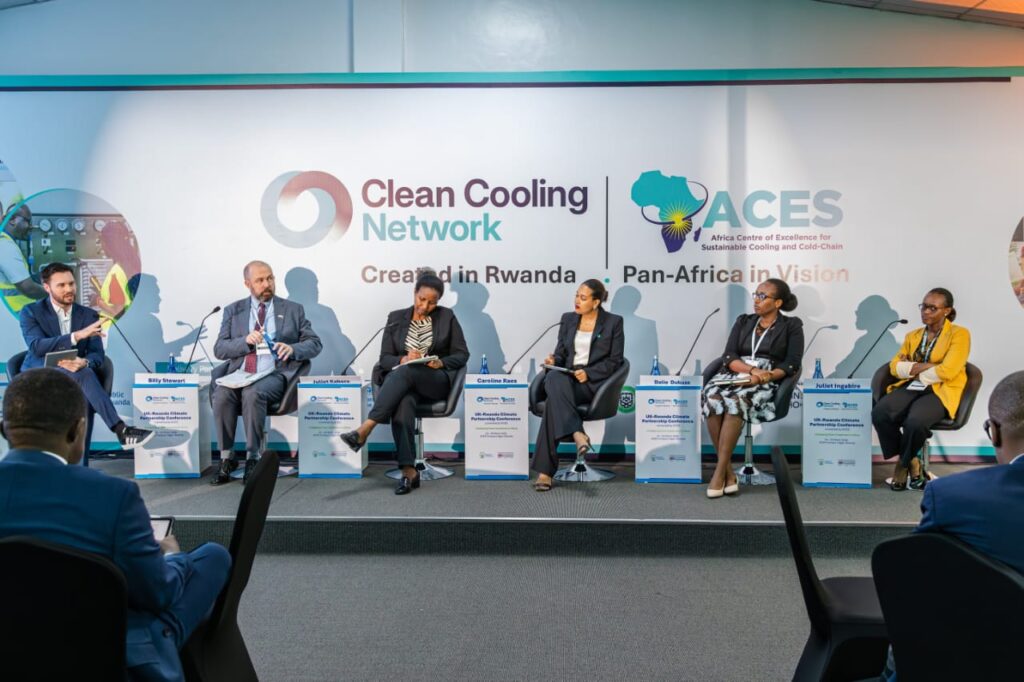
As one of responses, Rwanda’s Minister of Environment, Dr. Bernadette Arakwiye, convened a two-day conference bringing together government officials, private sector players, international organizations, and UK representatives.
The goal was to identify fast and practical solutions for scaling up efficient and environmentally safe cooling systems.
“We are exploring opportunities to acquire efficient equipment that is closer to farmers, from production to market,” she said. “We are asking ourselves—what is the role of government, what is the role of partners like the UK, UNEP, and the private sector?”

Dr.Arakwiye emphasized the need for solutions that deliver results quickly, rather than projects that take years to materialize.
The urgency was echoed by Toby Peters, the Executive Director of ACES, who stressed that cooling infrastructure is essential not only for preserving food but also for safeguarding economic value.
Across Africa, he noted, up to 30% of food is lost after harvest due to lack of refrigeration. Vaccines are also affected, with losses reaching up to 50% in some cases. “When food is lost, it’s not just the product—we lose its value, farmers lose income, and communities lose nutrition,” he said.
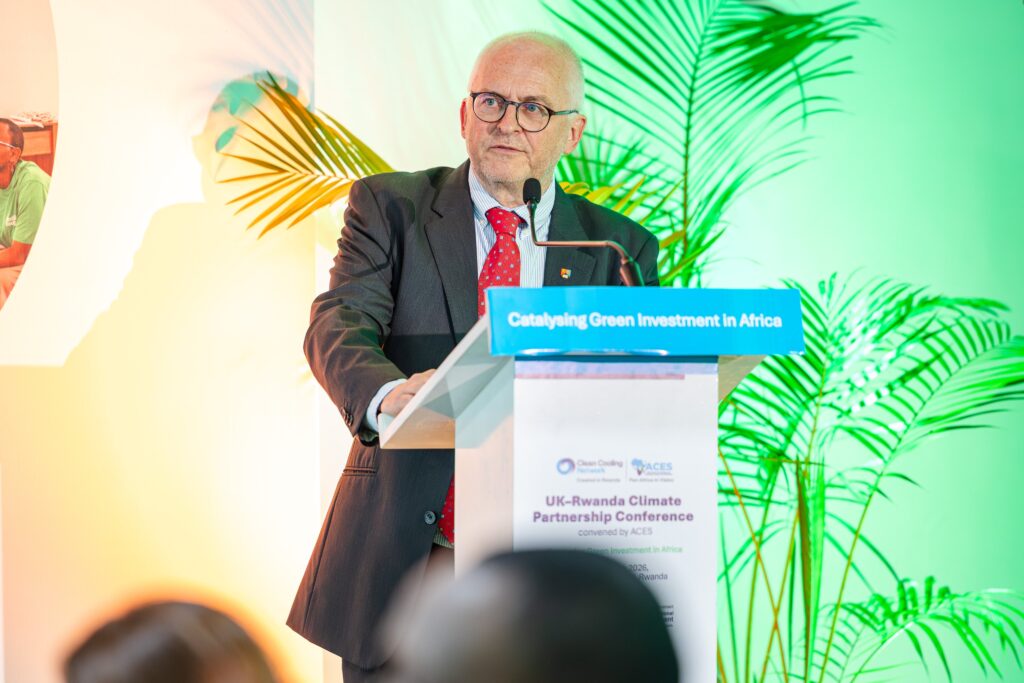
Peters added that solving this challenge requires a combination of training, technology, and viable business models. However, he also warned that cooling systems consume energy and rely on refrigerants, making it critical to adopt climate-friendly solutions.
Moving beyond grants to unlock investment
Gwilyn Jones, Leader of the UK East Africa Climate Lead highlighted a key shift in financing strategy. Traditional funding from major environmental funds such as the Green Climate Fund (GCF) and the Global Environment Facility is declining, prompting a move toward private investment.
“This partnership is about going beyond grant financing and unlocking large-scale private finance,” he said, pointing to innovative tools such as carbon markets and green bonds.
The UK has already invested over £20 million into cooling initiatives in Rwanda, working with institutions like the University of Birmingham. A key collaboration is also underway with the Rwanda Green Fund, aimed at building a new investment facility capable of attracting both domestic and international capital.
The broader ambition aligns with Rwanda’s climate investment plans in climate-smart agriculture, sustainable land management, and sustainable cities—all part of its long-term environmental commitments.
Cooling without harming the planet
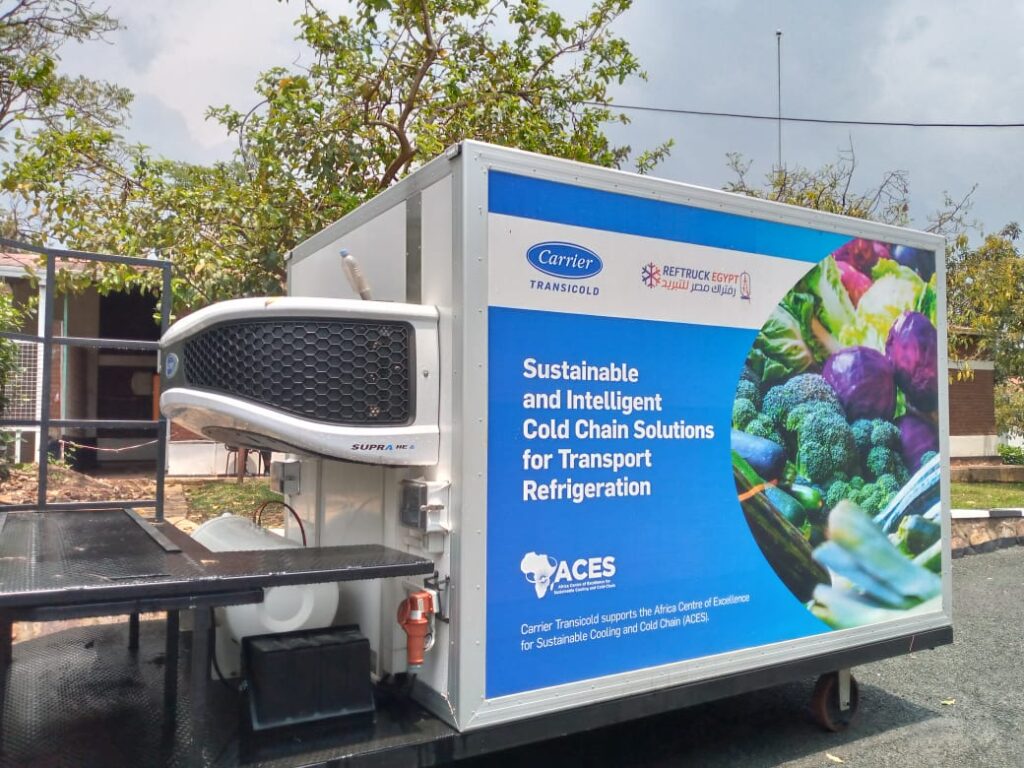
ACES warns that conventional refrigerants used in fridges and air conditioners release gases that damage the ozone layer and contribute to global warming. These emissions are linked to worsening climate patterns, including extreme rainfall and prolonged droughts.
Some of these gases, particularly hydrofluorocarbons (HFCs), have also been associated with health risks such as skin cancer, due to their impact on the ozone layer’s ability to block harmful solar radiation.
To address this, ACES is promoting alternative refrigerants such as hydrocarbons (HCs), ammonia, and CO₂, which are more environmentally friendly.
However, experts caution that these substances must be handled carefully, as improper use can lead to safety risks including fire hazards or poor air quality in enclosed spaces.