
 Simon Kamuzinzi
President Paul Kagame has reassured Rwandan Survivors that the country will never again witness killings like those carried out by the Interahamwe militias during the 1994 Genocide against the Tutsi, referencing the testimony of survivor Ngiruwonsanga Théoneste.
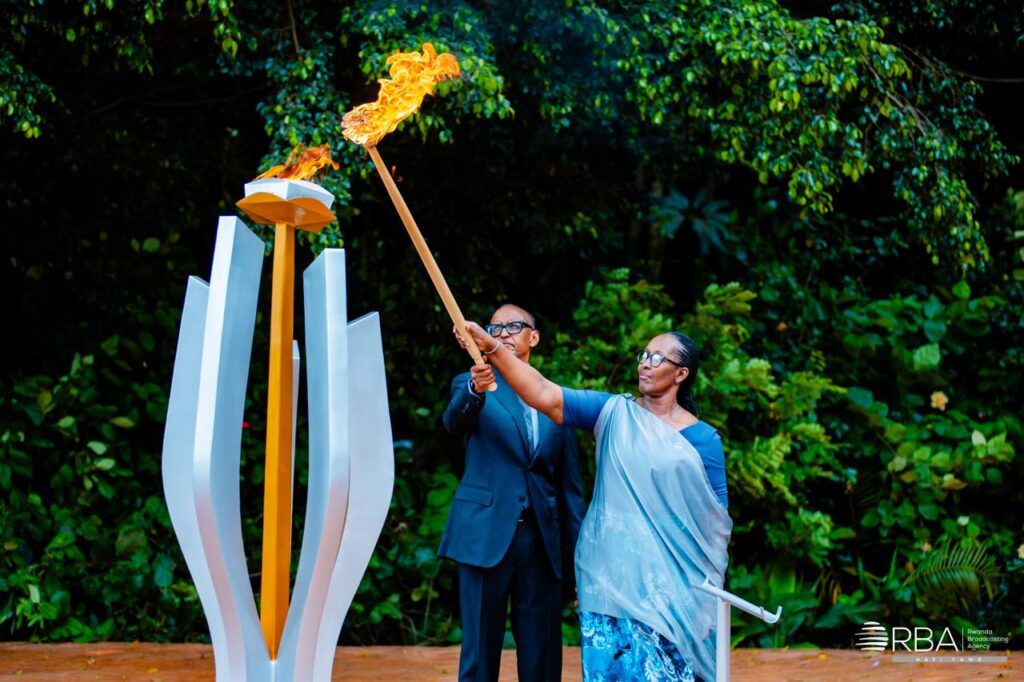
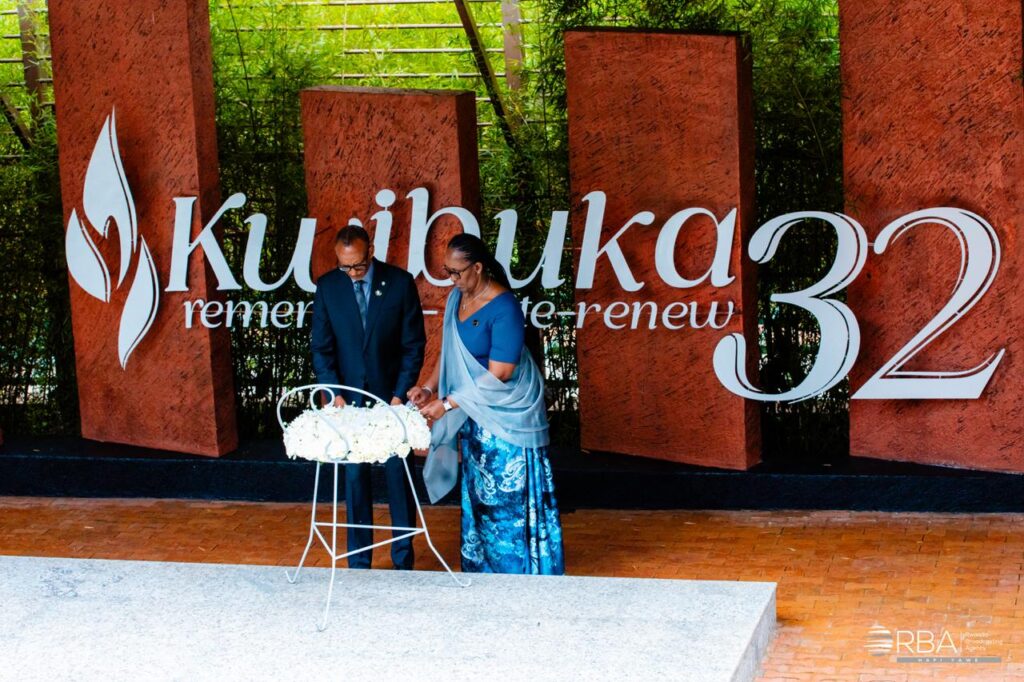
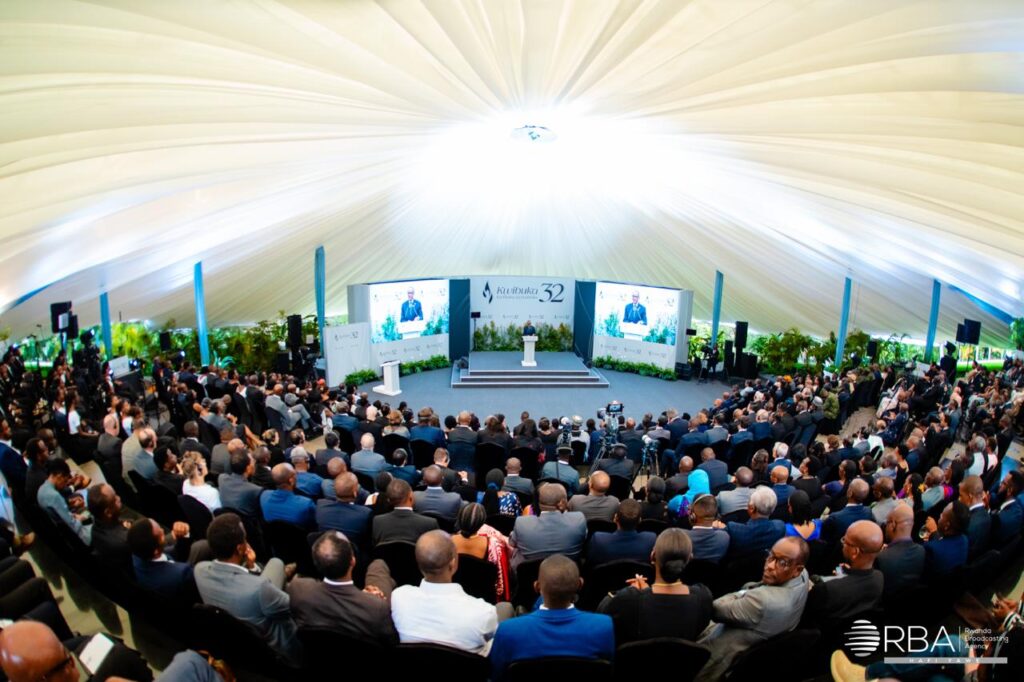
Speaking on Tuesday, April 7, 2026, at the launch of the national mourning week held at the Kigali Genocide Memorial, President Kagame strongly condemned genocide denial. His remarks followed a moving testimony by Ngiruwonsanga as well as an address by Jean Damascène Bizimana.
President Kagame emphasized that the accounts shared are grounded in undeniable truth, warning that those who attempt to distort or deny the history of the genocide face an impossible task. He noted that such efforts—often carried out both within and outside Rwanda—aim to rewrite history but will ultimately fail.
The President further stated that those who deny the genocide will face consequences, stressing that no one will ever again die in the way Ngiruwonsanga did. He described the survivor’s experience as akin to “coming back to life,” underscoring the impossibility of repeating such atrocities. Kagame added that anyone who attempts to destroy Rwanda would be confronted decisively, affirming that Rwandans—both current and future generations—will endure and protect their nation.
Ngiruwonsanga Théoneste’s survival story
Ngiruwonsanga, originally from Gafunzo in Shangi Sector of Nyamasheke District, recounted that even before 1994, Tutsis in his community lived under constant threat, facing repeated persecution and violence.
When the genocide began, he fled with his father, a teacher, seeking refuge at an ADEPR church in Gafunzo. However, they were forced out, and in the chaos, he became separated from his father, whom he never saw again.
He later sought shelter at his aunt’s home, but attackers captured them and took them to a local administrative office where many were killed. Ngiruwonsanga narrowly escaped and fled again, this time to a Seventh-day Adventist church. There, survivors were deceived under the pretense of being given food, lined up, and selected—particularly boys—for execution.
“At that moment, I felt I was facing death,” he recalled, describing how he mentally prepared for the inevitable.
He survived only because a militia member mistakenly identified him as someone else and spared him. Ngiruwonsanga continued to flee from one hiding place to another, including a baptismal household where attackers attempted to burn them alive; they survived only because rainwater beneath the ground prevented the fire from consuming them.
He later reunited with his mother and sister at a Catholic church, but killers—among them a militia member known as Yusufu—attacked the site, killing many. Ngiruwonsanga survived by lying beneath bodies on the altar, and later hid in a priest’s wardrobe when the attackers returned.
At another point, boys were selected and taken to be killed at a site known as Croix Rouge. He escaped again when the individual assigned to kill him was momentarily distracted.
Eventually, the remaining refugees were moved to Nyarushishi, an isolated hill lacking shelter, water, and basic necessities. The area, part of the French-controlled “Zone Turquoise,” was marked by severe hardship. Ngiruwonsanga recounted abuses committed there, including sexual violence against women and the handing over of men and boys to militias. Survivors lived in extreme deprivation, receiving minimal aid.
In August 1994, forces of the Rwandan Patriotic Army (Inkotanyi) arrived, bringing an end to killing. Ngiruwonsanga described that moment as the turning point of his life.
Rebuilding after survival
After the genocide, Ngiruwonsanga returned to school, completed university, and built a career. Today, he supports a family and has taken on the responsibility of raising and marrying off children under his care.
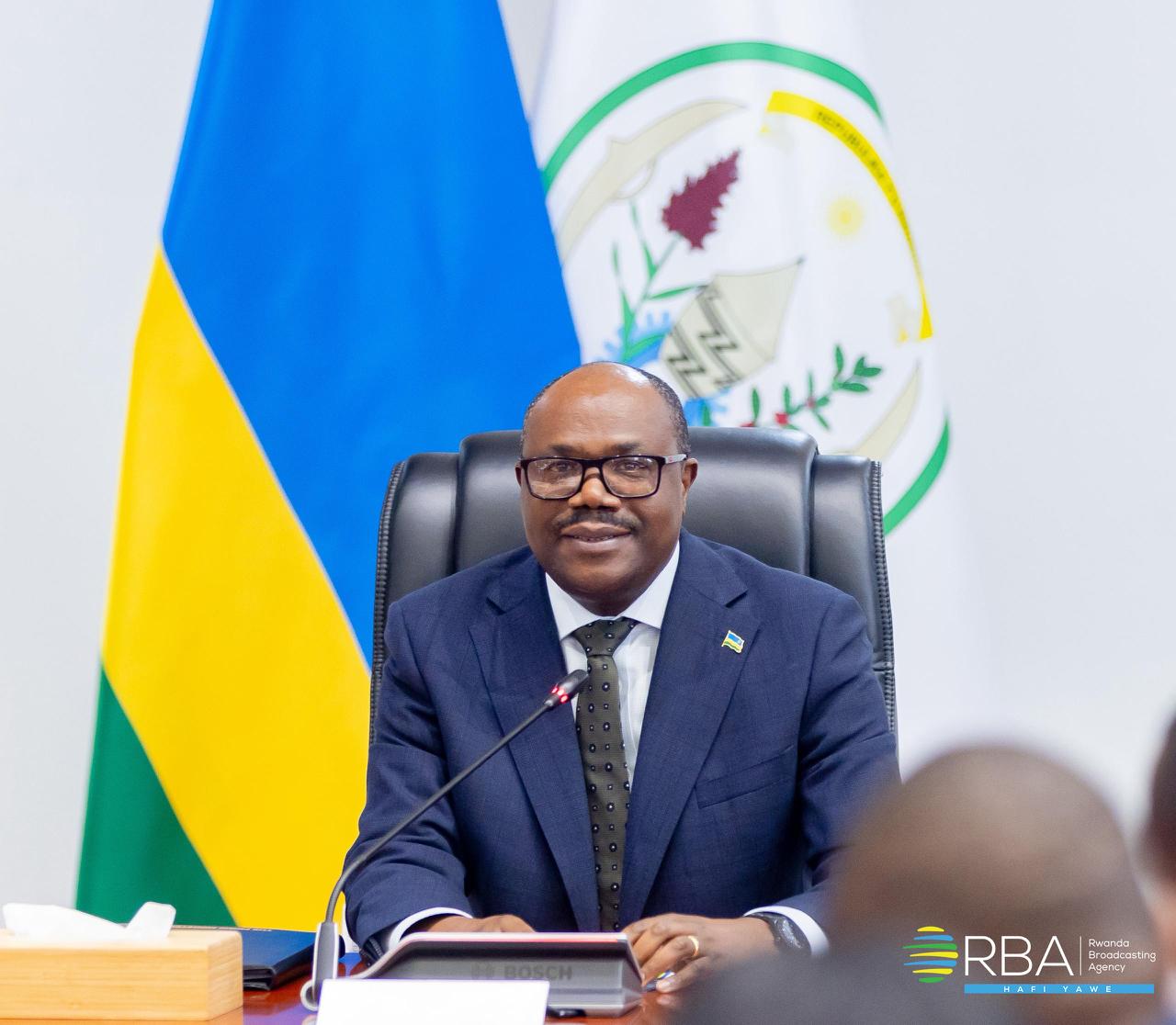
Minister Bizimana also highlighted the historical roots of division and discrimination under the former government of Juvénal Habyarimana, noting that both rhetoric and actions during that period laid the groundwork for the genocide.
President Kagame concluded by referencing ongoing activities by individuals linked to that former regime, including movements in the Democratic Republic of Congo. He stressed, however, that such efforts pose no threat to Rwanda’s stability or to the unity of its people.