
 Simon Kamuzinzi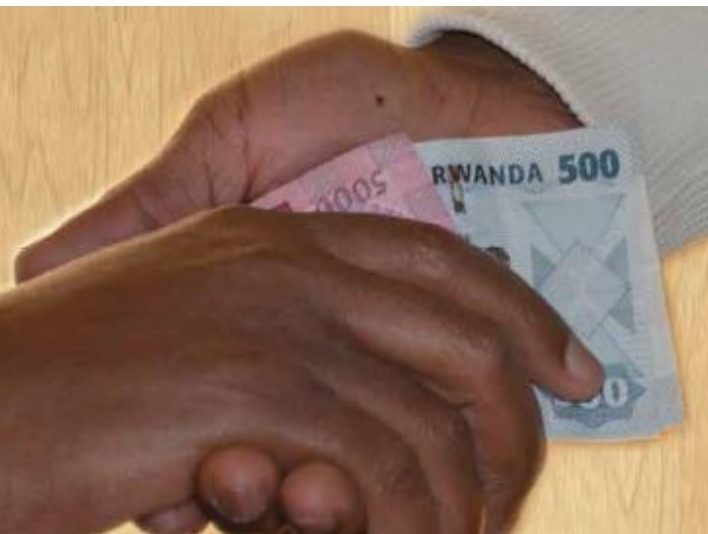
Transparency International (TI-Rwanda) is alarming over the growing burden of corruption on low-income earners, revealing that more than 71% of Rwandans who earn under Rwf 100,000 per month are being asked for bribes averaging Rwf 269,000.
The findings are from the newly released 2025 Rwanda Bribery Index (RBI) presented on Wednesday. Executive Director Apollinaire Mupiganyi noted that citizens are being pushed into impossible situations by officers who knowingly demand large sums, fully aware that bribery is a serious crime.
He said the average bribe is at least Rwf 269,000, a figure nearly three times higher than what many citizens earn monthly. This, he added, makes it nearly impossible for ordinary people to afford the corruption costs attached to services they need.
Praises and Condemnations by Chief Ombudsman
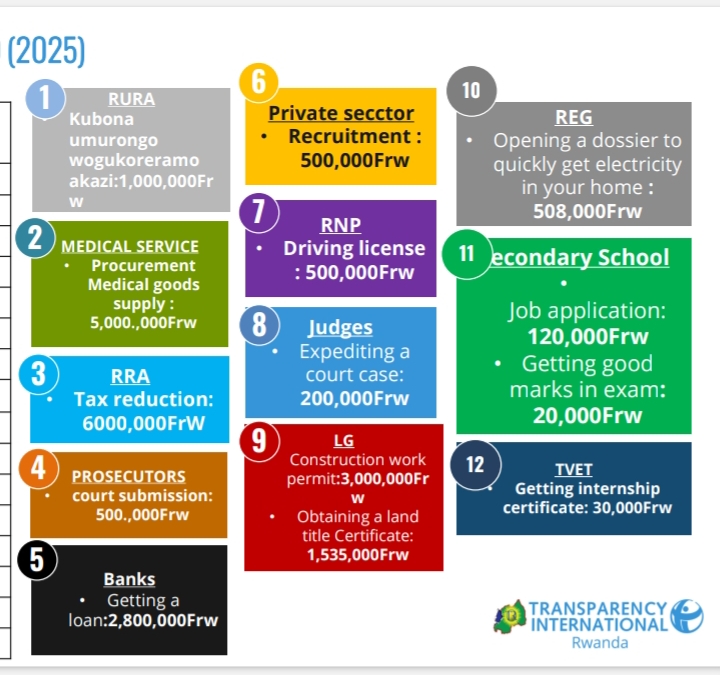
The report shows encouraging trends as well as bribery across public and private services in Rwanda has dropped from 18% in 2023 to 14% in 2025, and 98% of citizens say they can access services without paying bribes.
However, bribery still appears frequently in the private sector, the justice system, and local administration. Land services remain the most affected, accounting for 21% of all bribe reports, and rising to 30% in district One Stop Centers.
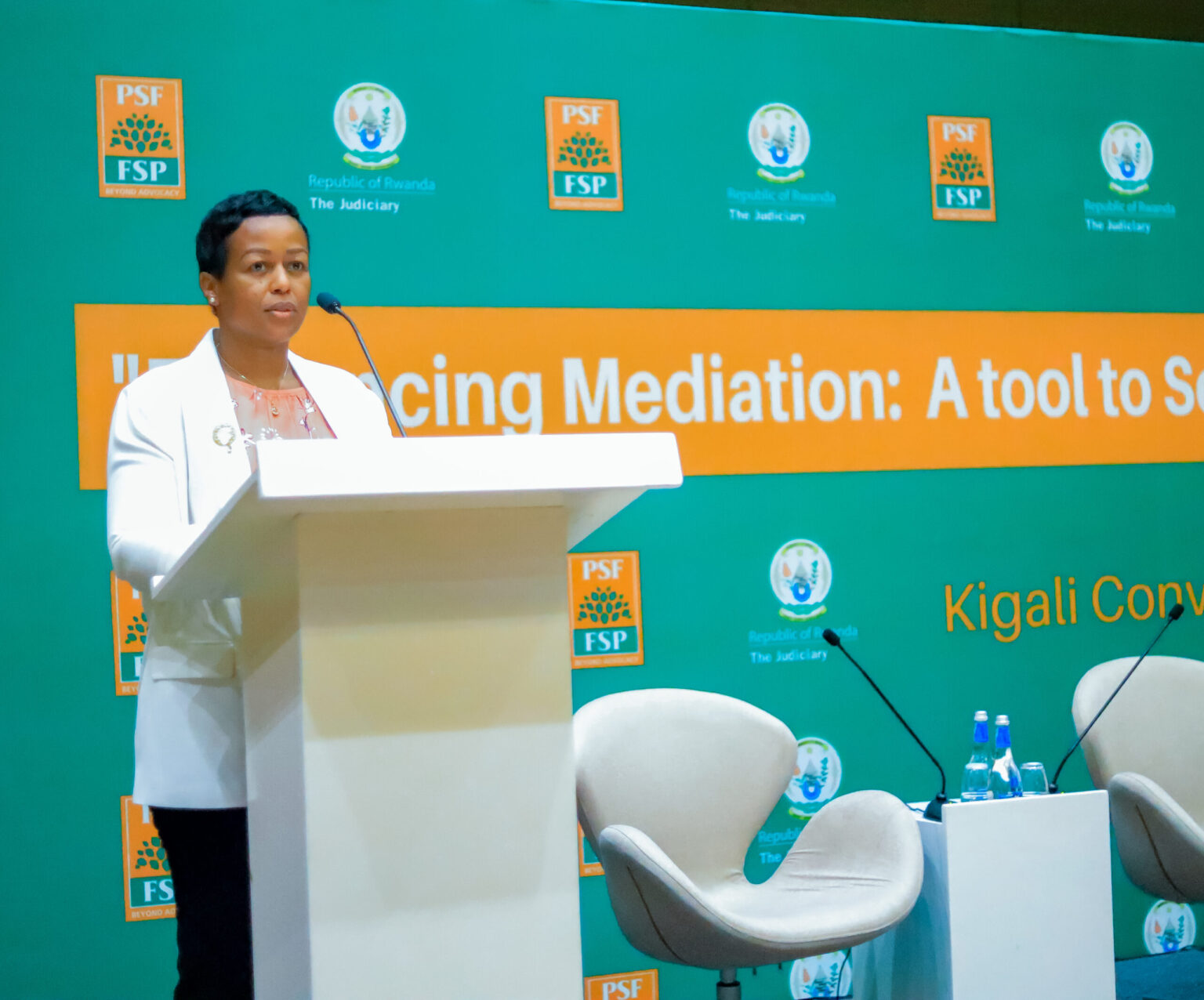
Speaking during the launch event, Chief Ombudsman Madeleine Nirere strongly criticized corruption within the banking sector, especially during loan processing. She said some applicants are asked for bribes to access loans they will eventually repay with interest.
She urged anti-corruption committees in both public and private institutions to act decisively, particularly in procurement and public auctions, where insider information often leads to unfair advantages.
Nirere pointed out cases where individuals acquire multiple properties through auctions because they receive privileged information from bank employees. She described this as a serious problem that authorities continue to discuss with private sector institutions.
TI-Rwanda also reminded the public that corruption crimes do not expire, meaning any assets acquired through bribery can still be seized by the State even years later. Offenders face 5 to 7 years in prison.
A comparison between the 2022 and 2025 Bribery Indexes shows a notable improvement, with national bribery levels dropping from 29% to 14%, which Transparency International describes as a significant and encouraging decline.