
 Kigaliinfo.com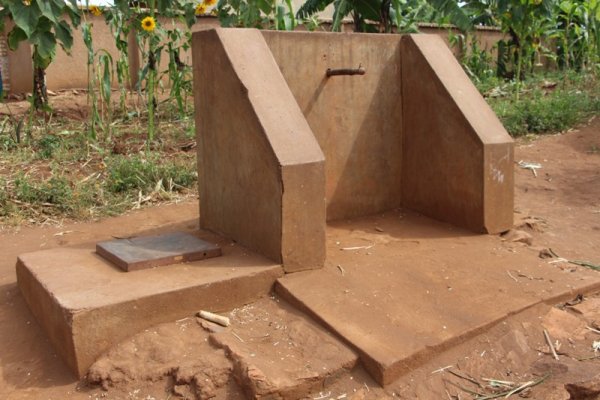
Rwanda joined the world in celebrating World Water Day (held annually on March 22), at a time when the government says it has brought water infrastructure to 82% of the population — although some people still complain about not having access to water.
Among those dissatisfied with the lack of access are residents of Ruhanga in Rusororo Sector, Gasabo District, who say they’ve gone a year without clean water despite construction of tanks and pipelines.
Fugence Karekezi, a resident of Ruhanga, spoke to RBA saying “It’s been a year since we last had water. It reaches maybe one household, but others don’t get any. We have a tank, but no water goes into it. When it does come, it flows through the pipes and only reaches a few.”
A woman who appeared alongside Karekezi on the national TV program “Good Morning Rwanda” pointed out that the public water taps given to residents are now overgrown with grass — a sign that they haven’t been used in a long time.
Other areas without water — and in some cases without any infrastructure — include parts of Nduba and Jabana sectors in Gasabo District.
Gemma Maniraruta, Director General of Water, Sanitation and Hygiene at the Ministry of Infrastructure (MININFRA), said that although some pipelines can deliver water when activated (not just in Ruhanga), this shows the potential for expanding access, and the government will use this opportunity to distribute the limited available water more equitably.
Maniraruta said: “Let me start by calming with the people of Ruhanga. The fact that water reaches there occasionally means it can reach regularly. What I can say is that we have limited water (produced by treatment plants), and some is lost on the way. Out of every 100 liters of water from the source, only 60 liters reach the people — the other 40 liters are lost through pipe leakages and other issues.”
She emphasized that no part of Rwanda should go without water for a whole week. She encouraged people who have gone that long without water to report it (to WASAC), and to be prepared with containers (like jerrycans) to store water when it is available.
Maniraruta also mentioned that in addition to accelerating water distribution, new projects are underway to bring clean water to areas that lack it or have limited access. One such project, the Karenge water system, will supply water to parts of Rwamagana and Gasabo districts — specifically Ruhanga and surrounding areas.
She added that residents of Jabana and Nduba (Gasanze area) are also benefiting from water tanks being constructed in Gisozi, Ntora — a project done in partnership between the Rwandan government and the Japan International Cooperation Agency (JICA).
The international organization WaterAid, which supports the government in promoting water access, hygiene, and sanitation, is calling for collaboration among different sectors to ensure that areas without water in Rwanda gain access quickly.
WaterAid Rwanda Country Director Vestine Mukeshimana stressed that the issue of water access should be treated as an urgent matter, echoing the United Nations’ call that access to water and sanitation is a fundamental human right.
Mukeshimana said: “We urge the government and all its partners to understand the gravity of this issue. The lack of water doesn’t just affect one person — it leads to preventable losses. A resident who lacks water may fall sick, missing the opportunity to earn money. A child may miss school…”
She pointed out that having water infrastructure without actually delivering water is useless, and called on the government to allocate enough budget to speed up access to clean water without waiting years.
According to Rwanda’s 5th National Population and Housing Census (2022), 82% of households have access to clean water within a distance of no more than 500 meters — 96% in urban areas and 77% in rural areas.
MININFRA and WaterAid also stated that they are working with all relevant institutions to protect Rwanda’s watersheds and natural springs, so that groundwater supplies can increase.
They also called for rivers, lakes, and wetlands to be protected from pollution — especially from electronic waste.

 Simon Kamuzinzi