
 Simon Kamuzinzi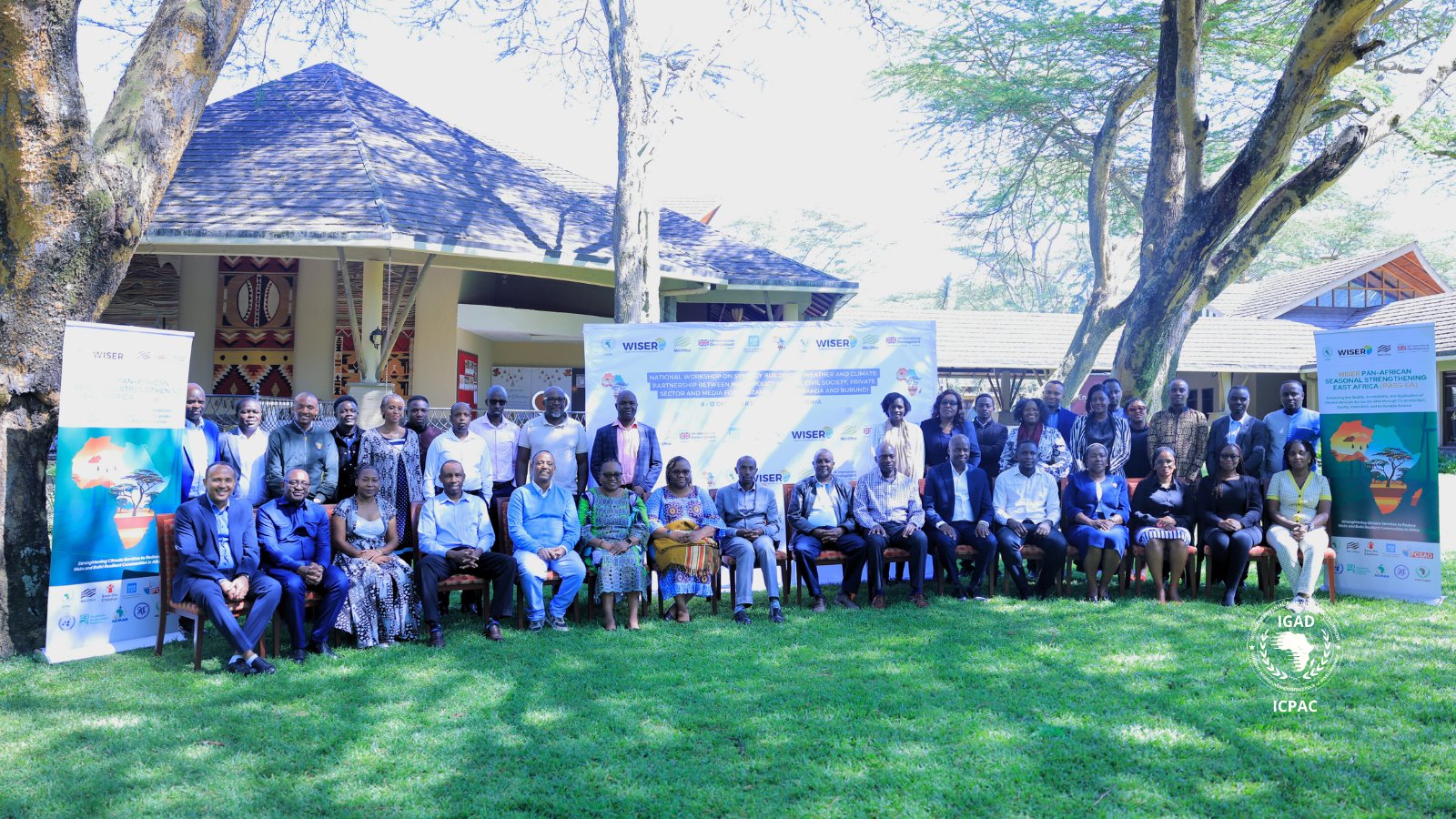
The Intergovernmental Authority on Development IGAD Climate Prediction and Applications Centre (ICPAC) has called for stronger coordination among key sectors to improve how climate information is shared with citizens across East African member countries.
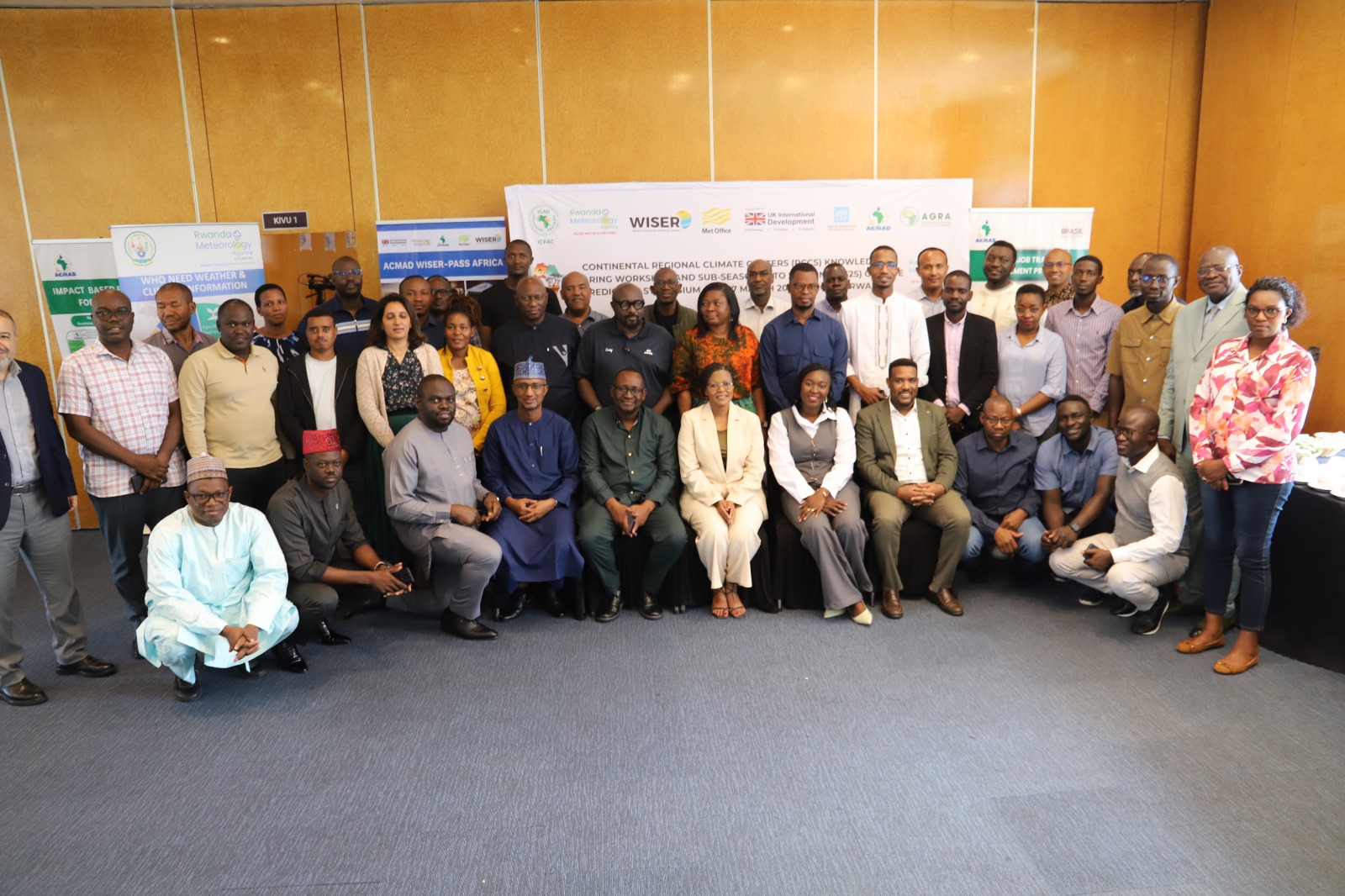
During a five-day regional training held in Naivasha (Kenya) from December 8–12, 2025, ICPAC brought together officers from National Meteorological and Hydrological Services (NMHS) and other government experts from different institutions, policymakers, civil society, key stakeholders, the private sector, sensitive sectors, and the media, drawn from Kenya, Tanzania, Burundi and Rwanda.
The objective was to gain hands-on skills in using ICPAC products and platforms – including East Africa Hazards Watch and East Africa Drought Watch – to monitor, anticipate and respond to risks in real time.
The training organized by ICPAC in collaboration and supported by WISER, NORCAP, Save the Children International(SCI) and the UK Met Office, is focusing on “Synergy Building Engagement” as the theme, with a major course aimed at breaking down institutional silos and promoting joint action in climate communication.
Lore Collison, ICPAC’s Regional User Engagement Expert, emphasized that forecasts alone are not enough without coordination and shared responsibility.
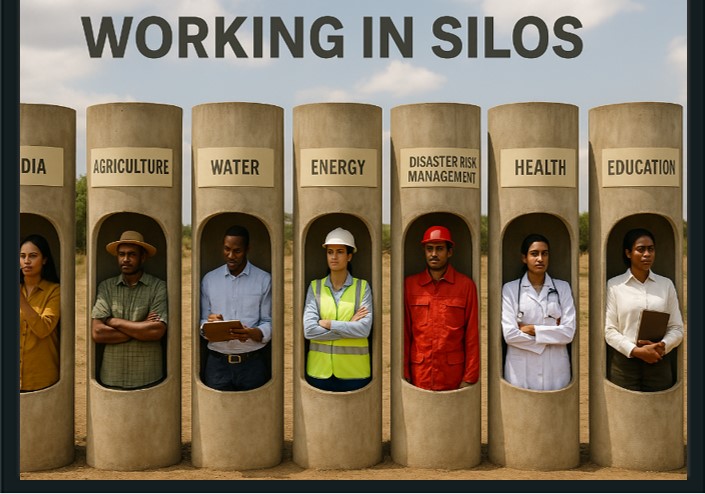
He encouraged the adoption of a new working approach described as “from silos to synergy”, highlighting that isolated sectoral efforts weaken national preparedness, while collaboration strengthens climate adaptation.
The training stressed that climate shocks such as floods, droughts and unpredictable rainfall affect multiple sectors simultaneously, which require united responses.
From water utilities adjusting reservoir releases, to energy planners anticipating hydropower shortages, and educators developing climate-smart curricula, each sector was encouraged to align its work with climate information in a coordinated way.
Special emphasis was placed on the role of the media as a strategic and critical bridge between technical experts and the public. Radio journalists are able to translate forecasts into simple languages, and the use of WhatsApp hubs for rapid climate alerts were cited as key tools to ensure that early warnings reach communities in time.
The training also promoted the Multi-Sectoral Seasonal Planning (MSSP) approach, which links all sectors to seasonal forecasts and supports joint interpretation and coordinated action, with the goal of reducing losses and improving preparedness across the region.
Strengthening Cross-Sector Climate Storytelling
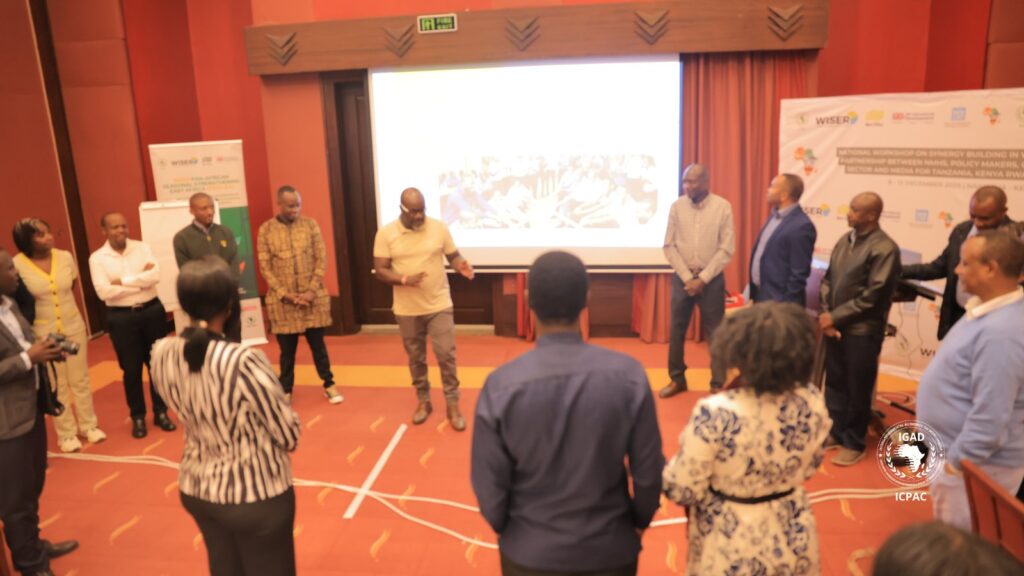
The training also featured a practical session led by Isaac Sagala, a Journalism Trainer with Wanahabari Centre in Nairobi, who guided participants through an interactive “Synergy Podcast” exercise designed to strengthen cross-sector understanding.
The exercise involved listening to short, sector-specific podcasts, where participants first focused on challenges, vulnerabilities and strengths within their own sectors before rotating to listen to other sector podcasts, helping them appreciate how climate risks and responses cut across institutions.
Through structured group discussions, Sagala encouraged participants from NMHS, Education, Energy, Water, Agriculture, Disaster Risk Managers (DRM) and the media to reflect on how their sectors both support and depend on others.
The session helped participants identify hidden interdependencies, shared risks and opportunities for collaboration, while also building skills in capturing, packaging and communicating climate-related stories in a way that promotes cooperation rather than isolated reporting.
Through this initiative, ICPAC aims to strengthen cross-border collaboration and build a more integrated climate communication system that better protects communities from climate-related risks.
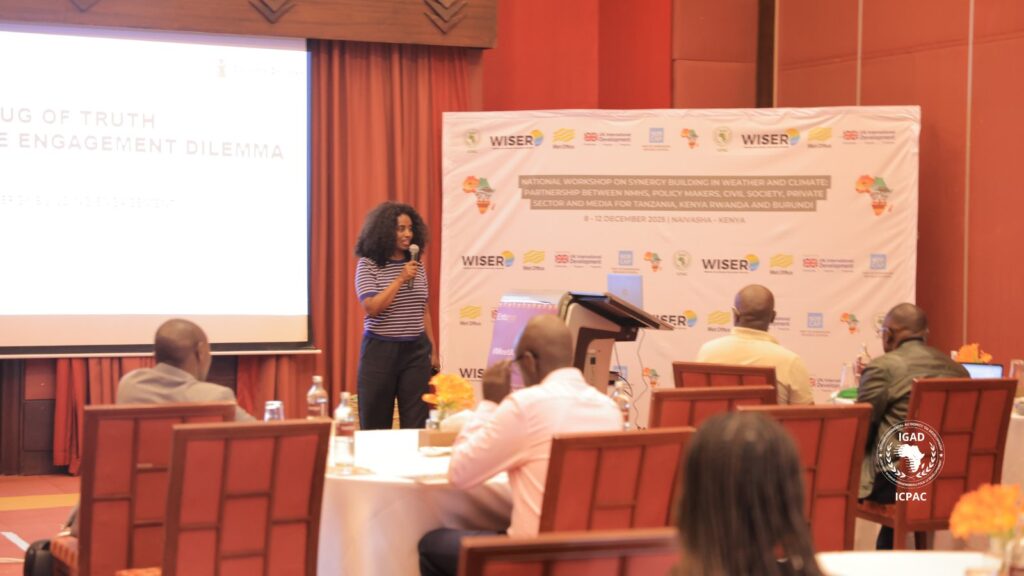
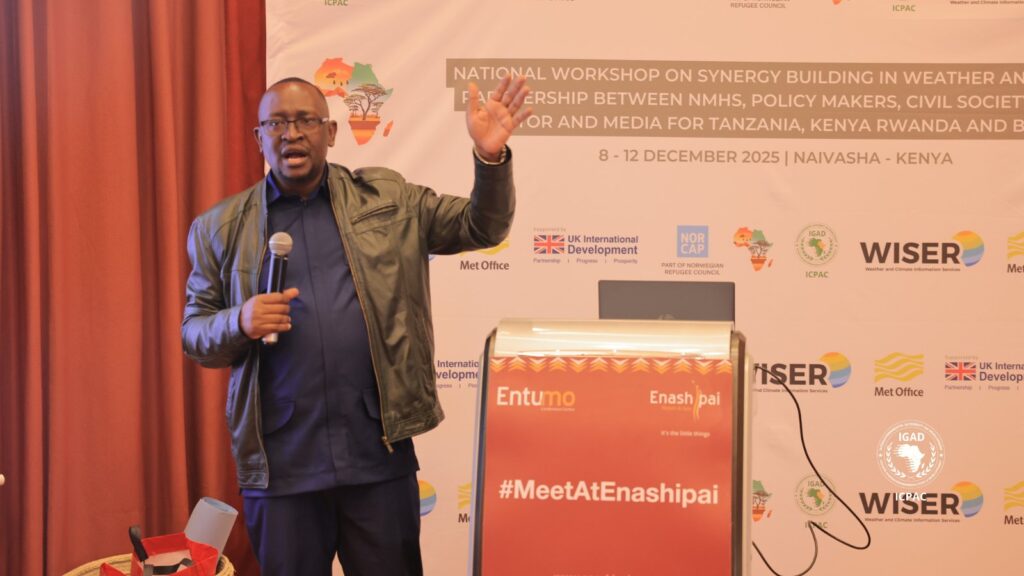
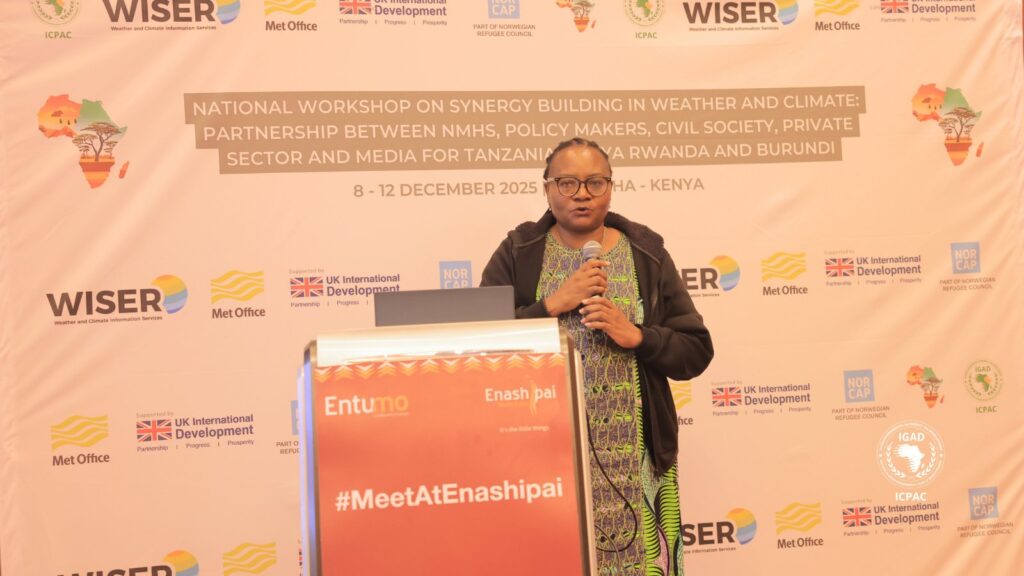
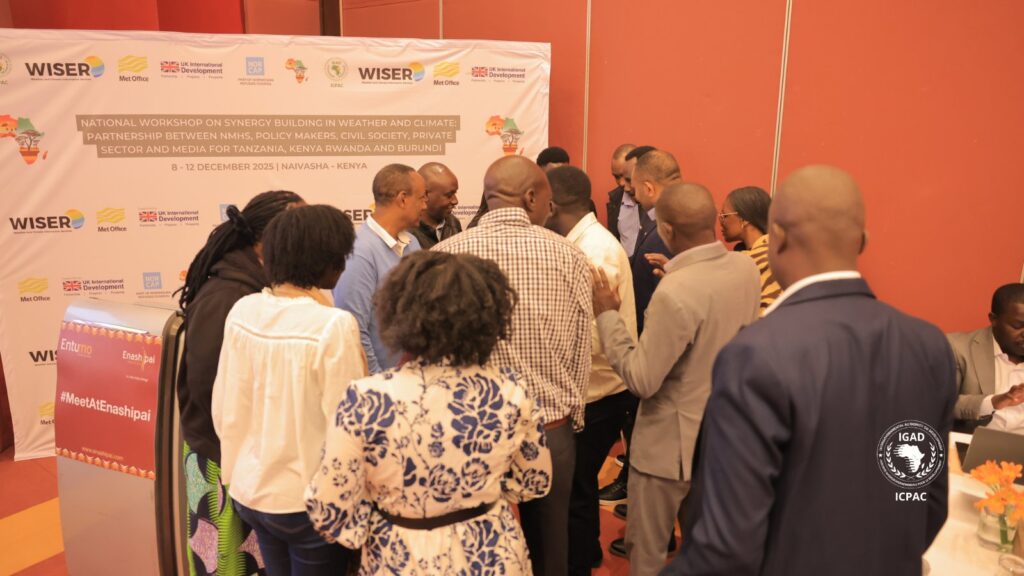
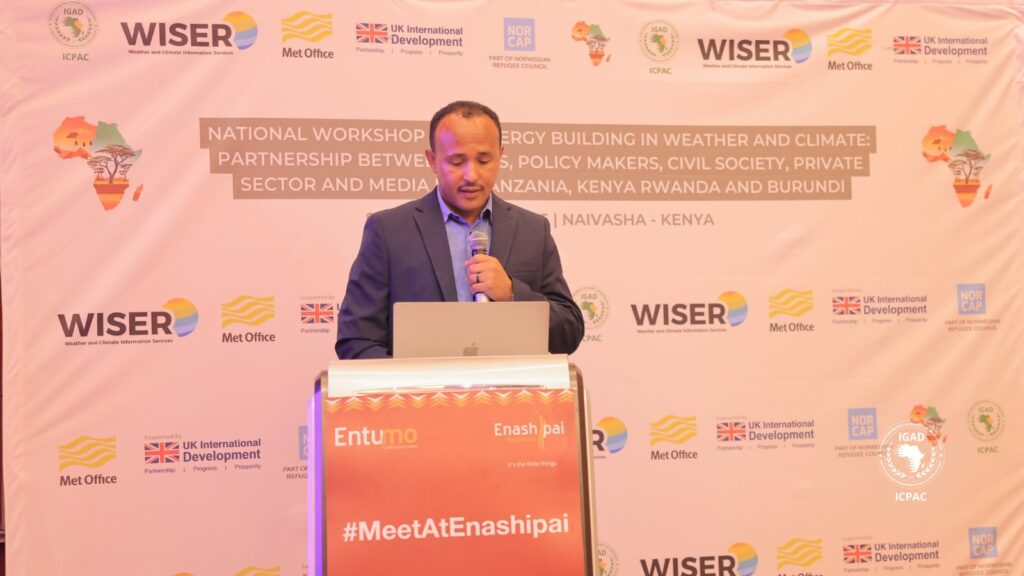
Titike Bahaga, Climate Scientist and Principal Investigator, CONFER, ACACIA, PASSAGE, PASS-EA Projects, among taking part in the launch of the training.