
 Simon Kamuzinzi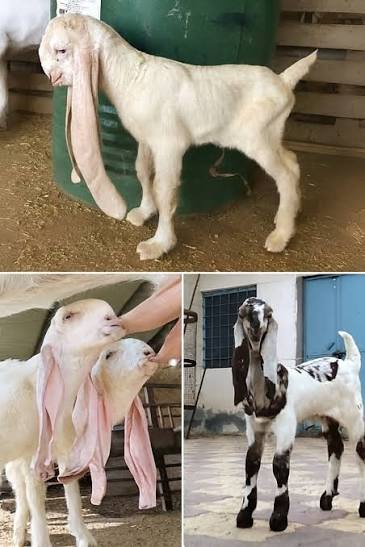
Rwanda will not prioritise goat milk in its national dairy development strategy, despite the existence of high-yield dairy goat breeds suited to drought-prone regions, according to the Rwanda Agriculture and Animal Resources Development Board (RAB).
Under the country’s second National Strategy for Transformation (NST2) and PSTA5, which both run until 2029, the government aims to double agricultural and livestock production, including milk output. However, policy makers have opted to focus exclusively on cattle for dairy production, while goats are prioritised for meat.
Some goat breeds, such as the Damascus (or Shami) goat originating from the Middle East, are known for producing between three and five litres of milk per day and for their ability to withstand heat and drought. The breed has drawn attention in parts of Africa for its low feed requirements and resilience in arid environments.
Agricultural experts note that these goats can survive on crop residues, household food waste and leaves from drought-tolerant trees, making them accessible to low-income households.
International organisations, including the UN’s Food and Agriculture Organization (FAO), have highlighted their potential contribution to nutrition and the fight against malnutrition.
Despite these attributes, RAB says national research indicates that goat milk would not generate sufficient economic returns to significantly accelerate Rwanda’s development.
“We focus on goats for meat production, while dairy production is centred on cattle,” said Dr. Fabrice Ndayisenga, Director of Animal Research at RAB. “Individuals who wish to rear dairy goats for specialised products such as cheese are free to do so and can receive technical support, including veterinary services. But at the national level, we have made clear strategic choices.”
According to the Ministry of Agriculture and Animal Resources (MINAGRI), Rwanda produced more than 1.15 million tonnes of milk in the 2024/25 fiscal year, equivalent to over 1.15 billion litres. This translates into an average daily production of about 3.16 million litres.
With a population of nearly 14 million, current production would allow each person to consume roughly a quarter of a litre of milk per day if evenly distributed. The government’s goal of doubling output by 2029 would raise per capita availability to about half a litre per day.
Rwanda’s decision highlights the trade-offs faced by African countries balancing climate resilience, nutrition and economic returns as they modernise their agricultural sectors.